PDF · English
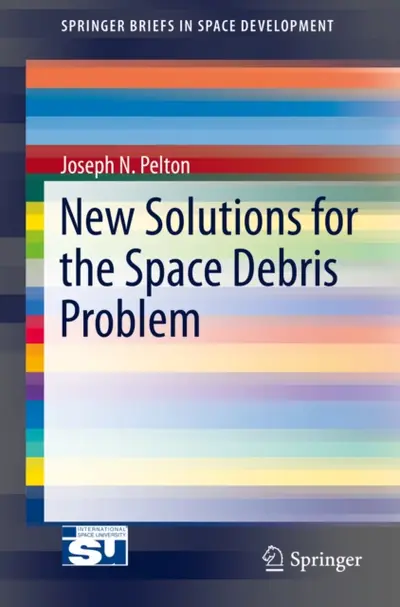
New Solutions for the Space Debris Problem
Price and availability
$60.99
Available in: Andorra, Austria, Australia, Belgium, Bulgaria, Canada, Switzerland, Cyprus, Czechia, Germany, Denmark, Estonia, Spain, Finland, France, United Kingdom, Guernsey, Greece, Croatia, Hungary, Ireland, Isle of Man, Iceland, Italy, Jersey, Japan, Liechtenstein, Lithuania, Luxembourg, Latvia, Monaco, Malta, Netherlands, Norway, Poland, Portugal, Romania, Sweden, Slovenia, Slovakia, San Marino, United States, Vatican City, South Africa
Stores: US, UK, Canada, EU, Australia.
Sign in to buyThe price is re-checked by the server before payment.
For personal use under the eBook licence.
- Format
- DRM
- Not stated by the publisher
- Language
- English
- Publisher
- Springer International Publishing
- Published
- 6 May 2015
- ISBN
- 9783319171517
- Subjects
- Public international law, Aerospace & aviation technology, Astronautics, Public international law, Solar system: the Sun and planets, Applied physics, Aerospace and aviation technology, Astronautics
About this book
Addressing a pressing issue in space policy, Pelton explores the new forms of technology that are being developed to actively remove the defunct space objects from orbit and analyzes their implications in the existing regime of international space law and public international law. This authoritative review covers the due diligence guidelines that nations are using to minimize the generation of new debris, mandates to de-orbit satellites at end of life, and innovative endeavours to remove non-functional satellites, upper stage rockets and other large debris from orbit under new institutional, financial and regulatory guidelines. Commercial space services currently exceed 100 billion USD business per annum, but the alarming proliferation in the population of orbital debris in low, medium and geosynchronous satellite orbits poses a serious threat to all kinds of space assets and applications. There is a graver concern that the existing space debris will begin to collide in a cascading manner, generating further debris, which is known as the Kessler Syndrome. Scientific analysis has indicated an urgent need to perform space debris remediation through active removal of debris and on-orbit satellite servicing.
Bibliographic data © Gardners Books Ltd.