EPUB · English
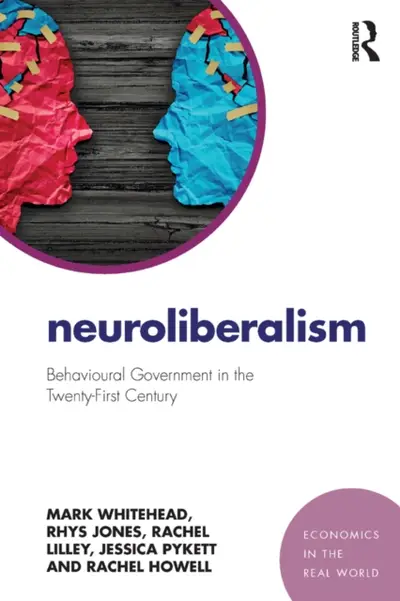
Neuroliberalism
Behavioural Government in the Twenty-First Century
Price and availability
$56.99
Available in: Andorra, Austria, Australia, Belgium, Bulgaria, Canada, Switzerland, Cyprus, Czechia, Germany, Denmark, Estonia, Spain, Finland, France, United Kingdom, Guernsey, Greece, Croatia, Hungary, Ireland, Isle of Man, Iceland, Italy, Jersey, Japan, Liechtenstein, Lithuania, Luxembourg, Latvia, Monaco, Malta, Netherlands, Norway, Poland, Portugal, Romania, Sweden, Slovenia, Slovakia, San Marino, United States, Vatican City, South Africa
Stores: US, UK, Canada, EU, Australia.
Sign in to buyThe price is re-checked by the server before payment.
For personal use under the eBook licence.
- Format
- EPUB
- DRM
- Not stated by the publisher
- Language
- English
- Publisher
- Taylor & Francis
- Published
- 11 September 2017
- ISBN
- 9781317410164
- Subjects
- Industrialized / developed countries, 21st century, Political structure & processes, Public administration, Central government policies, Political control & freedoms, Microeconomics, Political economy, Organizational theory & behaviour, Cognition and cognitive psychology, Political ideologies and movements, Public administration / Public policy
About this book
Many governments in the developed world can now best be described as 'neuroliberal': having a combination of neoliberal principles with policy initiatives derived from insights in the behavioural sciences. Neuroliberalism presents the results of the first critical global study of the impacts of the behavioural sciences on public policy and government actions, including behavioural economics, behavioural psychology and neuroeconomics. Drawing on interviews with leading behaviour change experts, organizations and policy-makers, and discussed in alignment with a series of international case studies, this volume provides a critical analysis of the ethical, economic, political and constitutional implications of behaviourally oriented government. It explores the impacts of the behavioural sciences on everyday life through a series of themes, including: understandings of the human subject; interpretations of freedom; the changing form and function of the state; the changing role of the corporation in society; and the design of everyday environments and technologies. The research presented in this volume reveals a diverse set of neuroliberal approaches to government that offer policy-makers and behaviour change professionals a real choice in relation to the systems of behavioural government they can implement. This book also argues that the behavioural sciences have the potential to support much more effective systems of government, but also generate new ethical concerns that policy-makers should be aware of.
Bibliographic data © Gardners Books Ltd.