PDF · English
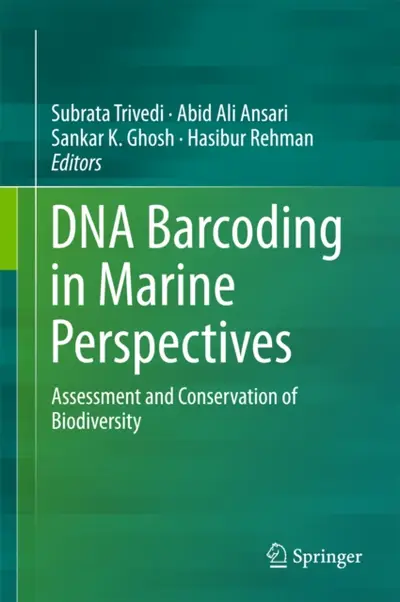
DNA Barcoding in Marine Perspectives
Assessment and Conservation of Biodiversity
Price and availability
$175.99
Available in: Andorra, Austria, Australia, Belgium, Bulgaria, Canada, Switzerland, Cyprus, Czechia, Germany, Denmark, Estonia, Spain, Finland, France, United Kingdom, Guernsey, Greece, Croatia, Hungary, Ireland, Isle of Man, Iceland, Italy, Jersey, Japan, Liechtenstein, Lithuania, Luxembourg, Latvia, Monaco, Malta, Netherlands, Norway, Poland, Portugal, Romania, Sweden, Slovenia, Slovakia, San Marino, United States, Vatican City, South Africa
Stores: US, UK, Canada, EU, Australia.
Sign in to buyThe price is re-checked by the server before payment.
For personal use under the eBook licence.
- Format
- DRM
- Not stated by the publisher
- Language
- English
- Publisher
- Springer International Publishing
- Published
- 31 August 2016
- ISBN
- 9783319418407
- Subjects
- Ecological science, the Biosphere, Genetics (non-medical), Biochemistry, Animal reproduction, Hydrology & the hydrosphere, Limnology (freshwater), Conservation of the environment, Computer science, Ecological science, the Biosphere, Genetics (non-medical), Computational biology / bioinformatics, Biochemistry, Hydrology and the hydrosphere, Conservation of the environment
About this book
More than two third of the surface area of our planet is covered by oceans and assessment of the marine biodiversity is a challenging task. With the increasing global population, there is a tendency to exploit marine recourses for food, energy and other requirements. This puts pressure on the fragile marine environment and needs sustainable conservation efforts. Marine species identification using traditional taxonomical methods are often burdened with taxonomic controversies. Here in this book we will discuss the comparatively new concept of DNA barcoding and its significance in marine perspective. This molecular technique can be helpful in the assessment of crypticspecies which are widespread in marine environment, and can also be used to link the different life cycle stages to the adult which is difficult to accomplish in marine ecosystems. Other advantages of DNA barcoding include authentication and safety assessment of seafood, wildlife forensics, conservation genetics and detection of invasive alien species (IAS). Global DNA barcoding efforts in the marine habitat include MarBOL, CeDAMar, CMarZ, SHARK-BOL, etc. DNA barcoding of different marine groups ranging from the microbes to mammals is to be revealed. In conjugation with newer and faster techniques like high throughput sequencing, DNA barcoding is serving as an effective modern tool in marine biodiversity assessment and conservation.
Bibliographic data © Gardners Books Ltd.