PDF · English
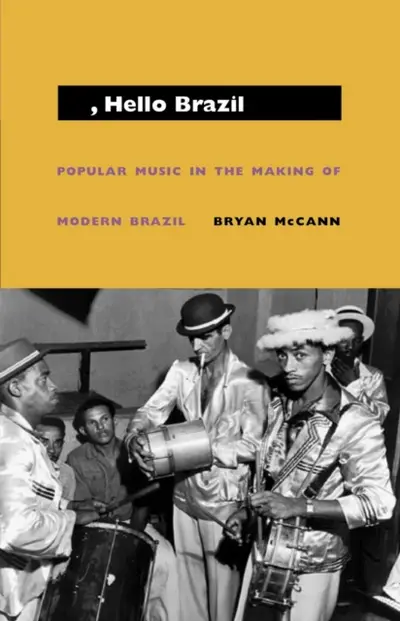
Hello, Hello Brazil
Popular Music in the Making of Modern Brazil
Price and availability
$47.99
Available in: Andorra, Austria, Australia, Belgium, Bulgaria, Canada, Switzerland, Cyprus, Czechia, Germany, Denmark, Estonia, Spain, Finland, France, United Kingdom, Guernsey, Greece, Croatia, Hungary, Ireland, Isle of Man, Iceland, Italy, Jersey, Japan, Liechtenstein, Lithuania, Luxembourg, Latvia, Monaco, Malta, Netherlands, Norway, Poland, Portugal, Romania, Sweden, Slovenia, Slovakia, San Marino, United States, Vatican City, South Africa
Stores: US, UK, Canada, EU, Australia.
Sign in to buyThe price is re-checked by the server before payment.
For personal use under the eBook licence.
- Format
- DRM
- Not stated by the publisher
- Language
- English
- Publisher
- Duke University Press
- Published
- 4 May 2004
- ISBN
- 9780822385639
- Subjects
- Latin America, Brazil, Music: styles & genres, Rock & Pop music, History of the Americas, Cultural studies, Latin America – Mexico, Central America, South America, Brazil, AVL, AVLP, JBCC, NHK
About this book
"e;Hello, hello Brazil"e; was the standard greeting Brazilian radio announcers of the 1930s used to welcome their audience into an expanding cultural marketplace. New genres like samba and repackaged older ones like choro served as the currency in this marketplace, minted in the capital in Rio de Janeiro and circulated nationally by the burgeoning recording and broadcasting industries. Bryan McCann chronicles the flourishing of Brazilian popular music between the 1920s and the 1950s. Through analysis of the competing projects of composers, producers, bureaucrats, and fans, he shows that Brazilians alternately envisioned popular music as the foundation for a unified national culture and used it as a tool to probe racial and regional divisions.McCann explores the links between the growth of the culture industry, rapid industrialization, and the rise and fall of Getulio Vargas's Estado Novo dictatorship. He argues that these processes opened a window of opportunity for the creation of enduring cultural patterns and demonstrates that the understandings of popular music cemented in the mid-twentieth century continue to structure Brazilian cultural life in the early twenty-first.
Bibliographic data © Gardners Books Ltd.