PDF · English
Gothic Ideology
Religious Hysteria and Anti-Catholicism in British Popular Fiction, 1780-1880
Price and availability
$101.99
Available in: Andorra, Austria, Australia, Belgium, Bulgaria, Canada, Switzerland, Cyprus, Czechia, Germany, Denmark, Estonia, Spain, Finland, France, United Kingdom, Guernsey, Greece, Croatia, Hungary, Ireland, Isle of Man, Iceland, Italy, Jersey, Japan, Liechtenstein, Lithuania, Luxembourg, Latvia, Monaco, Malta, Netherlands, Norway, Poland, Portugal, Romania, Sweden, Slovenia, Slovakia, San Marino, United States, Vatican City, South Africa
Stores: US, UK, Canada, EU, Australia.
Sign in to buyThe price is re-checked by the server before payment.
For personal use under the eBook licence.
- Format
- DRM
- Not stated by the publisher
- Language
- English
- Publisher
- University of Wales Press
- Published
- 15 May 2014
- ISBN
- 9781783160495
- Subjects
- Literary studies: c 1800 to c 1900, Literary studies: fiction, novelists & prose writers, Roman Catholicism, Roman Catholic Church, Literature: history and criticism, Literary studies: c 1800 to c 1900, Literary studies: fiction, novelists and prose writers, Roman Catholicism, Roman Catholic Church
About this book
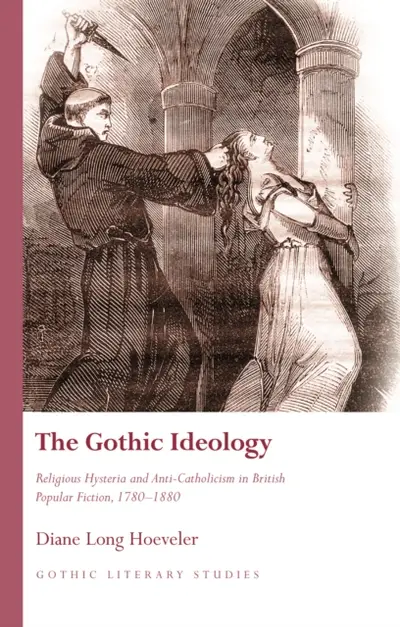
The Gothic Ideology argues that in order to modernize and secularize, the British Protestant imaginary needed an 'other' against which it could define itself as a culture and a nation with distinct boundaries. The 'Gothic ideology' is identified as an intense religious anxiety, produced by the aftershocks of the Protestant reformation, the Catholic Counter-Reformation, and the dynastic upheavals produced by both events in England, Germany, and France, and was played out in hundreds of Gothic texts published throughout Europe between the mid-eighteenth century and 1880. This book is the first to read the Gothic ideology through the historical context of both King Henry VIII's dissolution of the monasteries and the extensive French anti-clerical and pornographic works that were well-known to Horace Walpole and Matthew Lewis. The book argues that Gothic was thoroughly invested in a crude form of anti-Catholicism that fed lower class prejudices against the passage of a variety of Catholic Relief Acts that had been pending in Parliament since 1788 and finally passed in 1829.
Bibliographic data © Gardners Books Ltd.