PDF · English
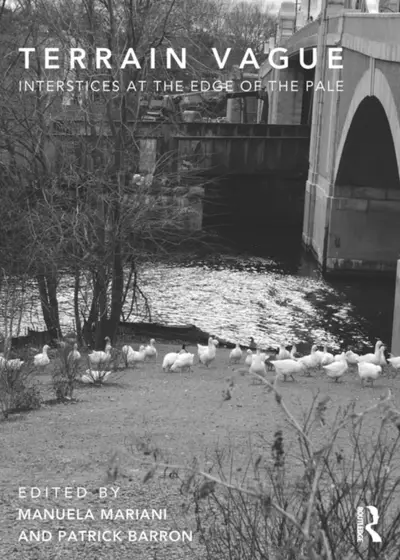
Terrain Vague
Interstices at the Edge of the Pale
Price and availability
$95.99
Available in: Andorra, Austria, Australia, Belgium, Bulgaria, Canada, Switzerland, Cyprus, Czechia, Germany, Denmark, Estonia, Spain, Finland, France, United Kingdom, Guernsey, Greece, Croatia, Hungary, Ireland, Isle of Man, Iceland, Italy, Jersey, Japan, Liechtenstein, Lithuania, Luxembourg, Latvia, Monaco, Malta, Netherlands, Norway, Poland, Portugal, Romania, Sweden, Slovenia, Slovakia, San Marino, United States, Vatican City, South Africa
Stores: US, UK, Canada, EU, Australia.
Sign in to buyThe price is re-checked by the server before payment.
For personal use under the eBook licence.
- Format
- DRM
- Not stated by the publisher
- Language
- English
- Publisher
- Taylor & Francis
- Published
- 15 August 2013
- ISBN
- 9781134071470
- Subjects
- City & town planning - architectural aspects, Urban communities, Human geography, World, Landscape architecture and design, Settlement, urban and rural geography, Urban and municipal planning and policy
About this book
As planners and designers have turned their attentions to the blighted, vacant areas of the city, the concept of "e;terrain vague,"e; has become increasingly important. Terrain Vague seeks to explore the ambiguous spaces of the city -- the places that exist outside the cultural, social, and economic circuits of urban life. From vacant lots and railroad tracks, to more diverse interstitial spaces, this collection of original essays and cases presents innovative ways of looking at marginal urban space, with studies from the United States, Europe and the Middle East, from a diverse group of planners, geographers, and urban designers.Terrain Vague is a cooperative effort to redefine these marginal spaces as a central concept for urban planning and design. Presenting innovative ways of looking at marginal urban space, and focusing on its positive uses and aspects, the book will be of interest to all those wishing to understand our increasingly complex everyday surroundings, from planners, cultural theorists, and academics, to designers and architects.
Bibliographic data © Gardners Books Ltd.