PDF · English
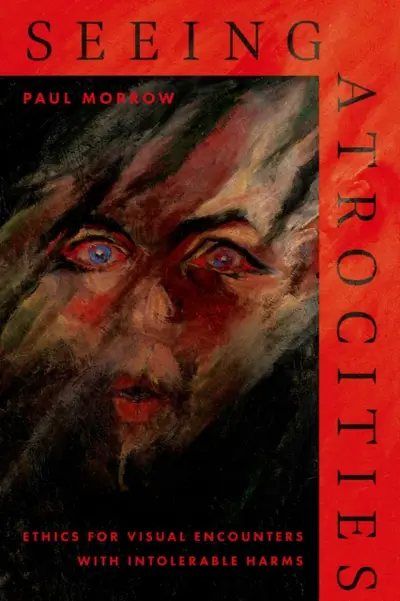
Seeing Atrocities
Ethics for Visual Encounters with Intolerable Harms
Price and availability
$25.99
Available in: Andorra, Austria, Australia, Belgium, Bulgaria, Canada, Switzerland, Cyprus, Czechia, Germany, Denmark, Estonia, Spain, Finland, France, United Kingdom, Guernsey, Greece, Croatia, Hungary, Ireland, Isle of Man, Iceland, Italy, Jersey, Japan, Liechtenstein, Lithuania, Luxembourg, Latvia, Monaco, Malta, Netherlands, Norway, Poland, Portugal, Romania, Sweden, Slovenia, Slovakia, San Marino, United States, Vatican City, South Africa
Stores: US, UK, Canada, EU, Australia.
Sign in to buyThe price is re-checked by the server before payment.
For personal use under the eBook licence.
- Format
- DRM
- Not stated by the publisher
- Language
- English
- Publisher
- Oxford University Press
- Published
- 15 September 2025
- ISBN
- 9780197797013
- Subjects
- The arts, Philosophy: aesthetics, Ethics & moral philosophy, Social & political philosophy, The Arts, QDTN, QDTQ, QDTS
About this book
In the 21st century, it is impossible to avoid seeing atrocities. Pictures of grievous death populate the pages of newspapers and aggregators almost daily. Billboards and banner ads for humanitarian organizations routinely feature scenes of famine and forced displacement. With the spread of social media, our closest friends and relatives have become key sources of visual encounters with intolerable harms. Seeing Atrocities explains what we stand to gain from such encounters, and supplies crucial tools for navigating them. Images--from photographs and films to children's drawings and VR-renderings--convey vital information about causes and culpability for atrocities. At the same time, images increasingly serve as vectors for mis- and disinformation, fueling conspiracy theories and inspiring acts of violent extremism. Whether in the classroom or the courtroom, the museum or the living room, the stakes of visual encounters with atrocities are substantial. So too are the risks of misjudging them. By showing what it means to see atrocities as atrocities, Paul Morrow forges new links between ethics, political philosophy, and the philosophy of perception. By surveying a broad range of visual encounters with atrocities, he aids lawyers, journalists, and educators in their efforts to teach, report on, or adjudicate such harms. Finally, by proposing specific norms for seeing, sharing, and exhibiting atrocities, he addresses moral questions confronting every reader in our globally connected world.
Bibliographic data © Gardners Books Ltd.