EPUB · English
Fantastic Dreaming
The Archaeology of an Aboriginal Mission
Price and availability
$60.99
Available in: Andorra, Austria, Australia, Belgium, Bulgaria, Canada, Switzerland, Cyprus, Czechia, Germany, Denmark, Estonia, Spain, Finland, France, United Kingdom, Guernsey, Greece, Croatia, Hungary, Ireland, Isle of Man, Iceland, Italy, Jersey, Japan, Liechtenstein, Lithuania, Luxembourg, Latvia, Monaco, Malta, Netherlands, Norway, Poland, Portugal, Romania, Sweden, Slovenia, Slovakia, San Marino, United States, Vatican City, South Africa
Stores: US, UK, Canada, EU, Australia.
Sign in to buyThe price is re-checked by the server before payment.
For personal use under the eBook licence.
- Format
- EPUB
- DRM
- Not stated by the publisher
- Language
- English
- Publisher
- Bloomsbury Publishing (USA)
- Published
- 16 April 2009
- Pages
- 330
- ISBN
- 9780759118041
- Subjects
- Australasia, Oceania & other land areas, Australasia, Australasian & Pacific history, Archaeology, Australasia, Oceania, Pacific Islands, Atlantic Islands, Australia and New Zealand / Aotearoa, NHM, NK
About this book
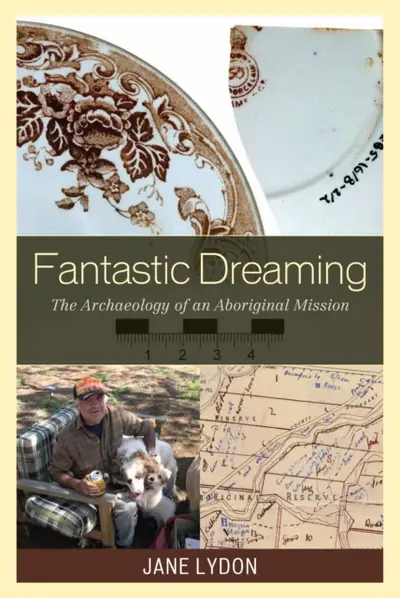
Fantastic Dreaming explores how whites have measured Australian Aboriginal people through their material culture and domestic practices, aspects of culture intimately linked to Enlightenment notions of progress and social institutions such as marriage and property. Archaeological investigation reveals that the Moravian missionaries' attempts to "e;civilize"e; the Wergaia-speaking people of northwestern Victoria centered on spatial practices, housing, and the consumption of material goods. After the mission closed in 1904, white observers saw the camp settlements that formed nearby as evidence of Aboriginal incapacity and immorality, rather than as symptoms of exclusion and poverty. Conceptions of transformation as acculturation survived in assimilation policies that envisioned Aboriginal people becoming the same as whites through living in European housing. These ideas persist in archaeological analysis that insists on Aboriginality as otherness and difference, and equates objects with identity. However Wergaia tradition was place-based, and, often invisibly, Indigenous people maintained traditional relationships to kin and country, resisting white authority through strategies of evasion and mobility. This study examines the complex role of material culture and spatial politics in shaping colonial identities and offers a critique of essentialism in archaeological interpretation.
Bibliographic data © Gardners Books Ltd.