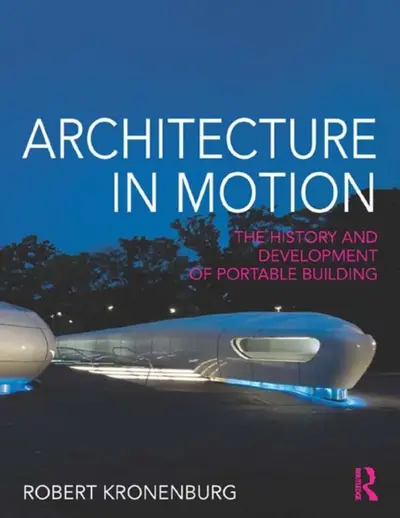
EPUB · English
Architecture in Motion
The history and development of portable building
Price and availability
$93.99
Available in: Andorra, Austria, Australia, Belgium, Bulgaria, Canada, Switzerland, Cyprus, Czechia, Germany, Denmark, Estonia, Spain, Finland, France, United Kingdom, Guernsey, Greece, Croatia, Hungary, Ireland, Isle of Man, Iceland, Italy, Jersey, Japan, Liechtenstein, Lithuania, Luxembourg, Latvia, Monaco, Malta, Netherlands, Norway, Poland, Portugal, Romania, Sweden, Slovenia, Slovakia, San Marino, United States, Vatican City, South Africa
Stores: US, UK, Canada, EU, Australia.
Sign in to buyThe price is re-checked by the server before payment.
For personal use under the eBook licence.
- Format
- EPUB
- DRM
- Not stated by the publisher
- Language
- English
- Publisher
- Taylor & Francis
- Published
- 15 August 2013
- ISBN
- 9781136704529
- Subjects
- Architectural structure & design, Environmentally-friendly and sustainable architecture and design, History of architecture, Building construction and materials
About this book
The idea that architecture can be portable is one that grabs the imagination of both designers and the people who use it, perhaps because it so often forecasts a dynamic and creative solution to the complex problems of our contemporary mobile society, while at the same time dealing with issues of practicality, economy and sustainability.Architecture in Motion examines the development of portable, transportable, demountable and temporary architecture from prehistory to the present day. From familiar vernacular models such as the tent, mobile home and houseboat, to ambitious developments in military and construction engineering, all aspects of portable building are considered.Building on his earlier works Portable Architecture and Houses in Motion, Robert Kronenburg compares traditional forms of building, current commercial products and the work of innovative designers, and examines key contemporary portable buildings to reveal surprising, exciting and imaginative examples. He explores the philosophical and technological issues raised by these experimental and futuristic prototypes.By understanding the nature of transitory architecture, a new ecologically aware design strategy can be developed to prioritise buildings that 'tread lightly on the earth' and still convey the sense of identity and community necessary for an established responsible society. This book provides a unique insight into this pivotal field of design.
Bibliographic data © Gardners Books Ltd.