EPUB · English
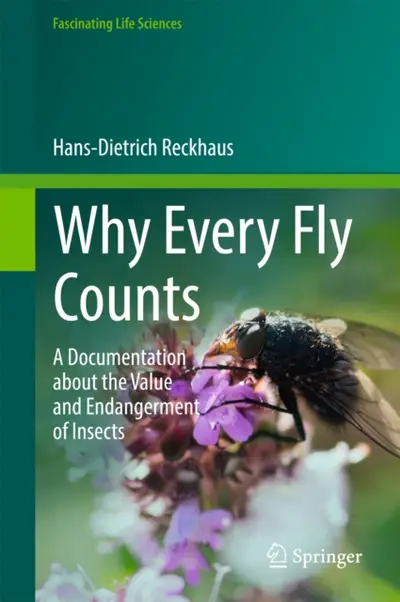
Why Every Fly Counts
A Documentation about the Value and Endangerment of Insects
- Science & mathematics
- Nature, environment & geography
- Technology & engineering
- Lifestyle, food & travel
Price and availability
$37.99
Available in: Andorra, Austria, Australia, Belgium, Bulgaria, Canada, Switzerland, Cyprus, Czechia, Germany, Denmark, Estonia, Spain, Finland, France, United Kingdom, Guernsey, Greece, Croatia, Hungary, Ireland, Isle of Man, Iceland, Italy, Jersey, Japan, Liechtenstein, Lithuania, Luxembourg, Latvia, Monaco, Malta, Netherlands, Norway, Poland, Portugal, Romania, Sweden, Slovenia, Slovakia, San Marino, United States, Vatican City, South Africa
Stores: US, UK, Canada, EU, Australia.
Sign in to buyThe price is re-checked by the server before payment.
For personal use under the eBook licence.
- Format
- EPUB
- DRM
- Not stated by the publisher
- Language
- English
- Publisher
- Springer International Publishing
- Published
- 14 June 2017
- ISBN
- 9783319587653
- Subjects
- Biology, life sciences, Ecological science, the Biosphere, Zoology: Invertebrates, Insects (entomology), Conservation of wildlife & habitats, Technology: general issues, Wildlife: butterflies, other insects & spiders, Life sciences: general issues, Ecological science, the Biosphere, Zoology and animal sciences, Engineering: general
About this book
This book discusses the beneficial and harmful effects of insects and explains their development and significance for biodiversity.Threatening pests or threatened beneficials? Biting midges are wonderful insects. The animals are so tiny and uniquely shaped that they are particularly good at pollinating the small and tight flowers of the cocoa tree. Without them, there would be much less chocolate. We associate other insects more with the damage that they cause. Mosquitoes and wasps bite us. Moth larvae damage textiles and contaminate foods. Ants undermine our paths and flies are just a pain.But what exactly is our relationship with insects? Are they more beneficial or harmful? What role do they play in the world? What are the effects of climate change: Will the number of insects continue to increase?
Bibliographic data © Gardners Books Ltd.