EPUB · English
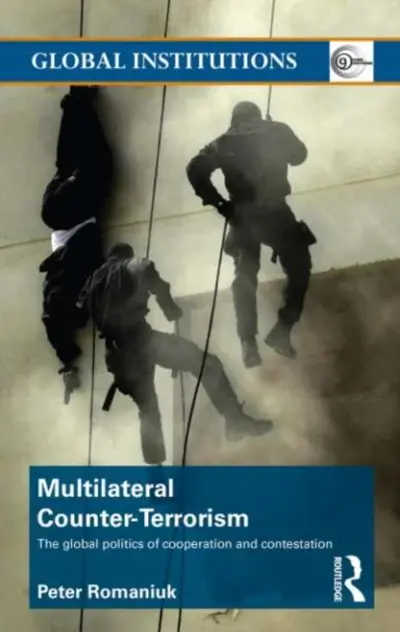
Multilateral Counter-Terrorism
The global politics of cooperation and contestation
Price and availability
$59.99
Available in: Andorra, Austria, Australia, Belgium, Bulgaria, Canada, Switzerland, Cyprus, Czechia, Germany, Denmark, Estonia, Spain, Finland, France, United Kingdom, Guernsey, Greece, Croatia, Hungary, Ireland, Isle of Man, Iceland, Italy, Jersey, Japan, Liechtenstein, Lithuania, Luxembourg, Latvia, Monaco, Malta, Netherlands, Norway, Poland, Portugal, Romania, Sweden, Slovenia, Slovakia, San Marino, United States, Vatican City, South Africa
Stores: US, UK, Canada, EU, Australia.
Sign in to buyThe price is re-checked by the server before payment.
For personal use under the eBook licence.
- Format
- EPUB
- DRM
- Not stated by the publisher
- Language
- English
- Publisher
- Taylor & Francis
- Published
- 5 April 2010
- ISBN
- 9781135156985
- Subjects
- Social & political philosophy, Sociology, International relations, Diplomacy, International institutions, Human rights, Terrorism, armed struggle, Warfare & defence, Criminology: legal aspects, International human rights law, World, Espionage and secret services, International institutions / intergovernmental organizations, Terrorism, armed struggle
About this book
Contemporary terrorism is a global phenomenon requiring a globalized response. In this book Peter Romaniuk aims to assess to what extent states seek multilateral responses to the threats they face from terrorists. Providing a concise history and a clear discussion of current patterns of counter-terrorist co-operation, this book: analyses a wide spectrum of institutions from the United Nations and its various bodies to military, intelligence and law enforcement agencies explains the full range of cooperative counter-terrorist activities and the patterns across them, from the use of intelligence and military force to criminal law measures, financial controls and diplomacy examines under what conditions states cooperate to suppress terrorism evaluates how existing international institutions been affected by the US-led "e;global war on terror,"e; launched after the 9/11 terrorist attacks. The book contests that the whilst there are several notable examples of successful counterterrorism cooperation, past and present, this work suggests that the broader trend can only be understood if we accept that across the domains of counter-terrorism policy, cooperation often resembles a competition for influence over outcomes. Multilateral Counter-terrorism is an essential resource for all students and scholars of international politics, criminology and terrorism studies.
Bibliographic data © Gardners Books Ltd.