EPUB · English
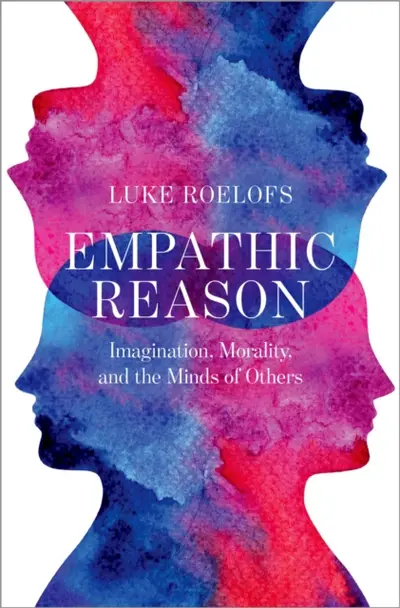
Empathic Reason
Imagination, Morality, and the Minds of Others
Price and availability
$76.99
Available in: Andorra, Austria, Australia, Belgium, Bulgaria, Canada, Switzerland, Cyprus, Czechia, Germany, Denmark, Estonia, Spain, Finland, France, United Kingdom, Guernsey, Greece, Croatia, Hungary, Ireland, Isle of Man, Iceland, Italy, Jersey, Japan, Liechtenstein, Lithuania, Luxembourg, Latvia, Monaco, Malta, Netherlands, Norway, Poland, Portugal, Romania, Sweden, Slovenia, Slovakia, San Marino, United States, Vatican City, South Africa
Stores: US, UK, Canada, EU, Australia.
Sign in to buyThe price is re-checked by the server before payment.
For personal use under the eBook licence.
- Format
- EPUB
- DRM
- Not stated by the publisher
- Language
- English
- Publisher
- Oxford University Press
- Published
- 19 June 2026
- ISBN
- 9780197519950
- Subjects
- Philosophy of mind, Ethics & moral philosophy, Cognition & cognitive psychology, Cognition and cognitive psychology, QDTM, QDTQ
About this book
Is it rational to be moral? Is it irrational to not care at all about anybody but yourself? In Empathic Reason, Luke Roelofs defends Empathic Rationalism, a new account of the relationship between morality and rationality. They vindicate the idea that we rationally have to care about other people because failing to do so involves treating them as less real than ourselves, explaining this in terms of the indispensable role of imagination in understanding other minds. Traditional approaches to moral philosophy have often treated empathy--imaginatively taking on another's perspective--as contrasting with or even opposed to rationality, but Empathic Rationalism views it as an integral part of rationality. This provides a secular, naturalistic foundation for belief in objective morality: to act morally is simply to act rationally, which requires acting as our estimate of perfect empathy would tell us to act. Someone who consistently shows no desire to act in this way reveals themselves to be a solipsist in denial: they treat other minds as useful fictions and other people as props in a game of make-believe. This means that a fully consistent egoist thus holds irrational beliefs about other minds, while someone who only sometimes recognizes obligations to others is inconsistent, and thus also irrational. Morality, Roelofs argues, is the only rational course.
Bibliographic data © Gardners Books Ltd.