PDF · English
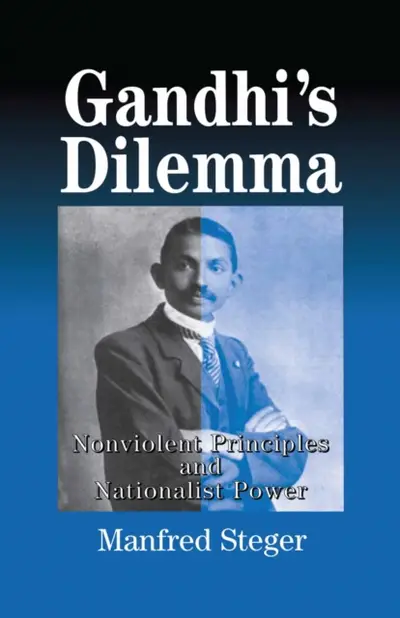
Gandhi's Dilemma
Nonviolent Principles and Nationalist Power
Price and availability
$60.99
Available in: Andorra, Austria, Australia, Belgium, Bulgaria, Canada, Switzerland, Cyprus, Czechia, Germany, Denmark, Estonia, Spain, Finland, France, United Kingdom, Guernsey, Greece, Croatia, Hungary, Ireland, Isle of Man, Iceland, Italy, Jersey, Japan, Liechtenstein, Lithuania, Luxembourg, Latvia, Monaco, Malta, Netherlands, Norway, Poland, Portugal, Romania, Sweden, Slovenia, Slovakia, San Marino, United States, Vatican City, South Africa
Stores: US, UK, Canada, EU, Australia.
Sign in to buyThe price is re-checked by the server before payment.
For personal use under the eBook licence.
- Format
- DRM
- Not stated by the publisher
- Language
- English
- Publisher
- Palgrave Macmillan US
- Published
- 30 April 2016
- ISBN
- 9781349621866
- Subjects
- Asia, Regional studies, History, Ethics & moral philosophy, Social & political philosophy, Violence in society, Politics & government, Political science & theory, Science: general issues, Asia, Politics and government, Political science and theory, Colonialism and imperialism, Ethics and moral philosophy, Social and political philosophy
About this book
Throughout his long career as a political thinker and activist, Mahatma Gandhi encountered the dilemma of either remaining faithful to his nonviolent principles and risking the failure of the Indian nationalist movement, or focusing on the seizure of political power at the expense of his moral message. Putting forward his vision of a "e;nonviolent nationalism,"e; Gandhi argued that Indian self-rule could be achieved without sacrificing the universalist imperatives of his nonviolent philosophy. Conceived as a study in the history of political thought, this book examines the origins, meaning, and unfolding of Gandhi s dilemma as it played itself out in both theory and political practice. This discussion is inextricably linked to significant and timely issues that are critical for the study of nationalism, for Gandhi s vision raises the important question of whether it is indeed possible to construct a benign type of nationalism that is rooted in neither physical nor conceptual forms of violence.
Bibliographic data © Gardners Books Ltd.