EPUB · English
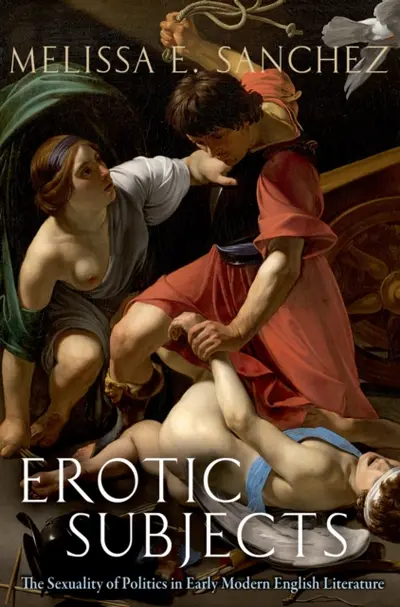
Erotic Subjects
The Sexuality of Politics in Early Modern English Literature
Price and availability
$36.99
Available in: Andorra, Austria, Australia, Belgium, Bulgaria, Canada, Switzerland, Cyprus, Czechia, Germany, Denmark, Estonia, Spain, Finland, France, United Kingdom, Guernsey, Greece, Croatia, Hungary, Ireland, Isle of Man, Iceland, Italy, Jersey, Japan, Liechtenstein, Lithuania, Luxembourg, Latvia, Monaco, Malta, Netherlands, Norway, Poland, Portugal, Romania, Sweden, Slovenia, Slovakia, San Marino, United States, Vatican City, South Africa
Stores: US, UK, Canada, EU, Australia.
Sign in to buyThe price is re-checked by the server before payment.
For personal use under the eBook licence.
- Format
- EPUB
- DRM
- Not stated by the publisher
- Language
- English
- Publisher
- Oxford University Press
- Published
- 6 April 2011
- ISBN
- 9780190208660
- Subjects
- United Kingdom, Great Britain, English, Literary studies: c 1500 to c 1800, Early modern history: c 1450/1500 to c 1700, Gender studies, gender groups, Sociology: sexual relations, Politics & government, 2ACB, Literary studies: c 1600 to c 1800, JBSF, JHB, Politics and government, NH
About this book
Treating sixteenth- and seventeenth-century erotic literature as part of English political history, Erotic Subjects traces some surprising implications of two early modern commonplaces: first, that love is the basis of political consent and obedience, and second, that suffering is an intrinsic part of love. Rather than dismiss such assumptions as mere conventions, Melissa Sanchez uncovers the political import of early modern literature's fascination with eroticized violence. Focusing on representations of masochism, sexual assault, and cross-gendered identification, Sanchez re-examines the work of politically active writers from Philip Sidney to John Milton. She argues that political allegiance and consent appear far less conscious and deliberate than traditional historical narratives allow when Sidney depicts abjection as a source of both moral authority and sexual arousal; when Edmund Spenser and William Shakespeare make it hard to distinguish between rape and seduction; when Mary Wroth and Margaret Cavendish depict women who adore treacherous or abusive lovers; when court masques stress the pleasures of enslavement; or when Milton insists that even Edenic marriage is hopelessly pervaded by aggression and self-loathing. Sanchez shows that this literature constitutes an alternate tradition of political theory that acknowledges the irrational and perverse components of power and thereby disrupts more conventional accounts of politics as driven by self-interest, false consciousness, or brute force. Erotic Subjects will be of interest to students and scholars of early modern literary and political history, as well as those interested in the histories of gender, sexuality, and affect more generally.
Bibliographic data © Gardners Books Ltd.