PDF · English
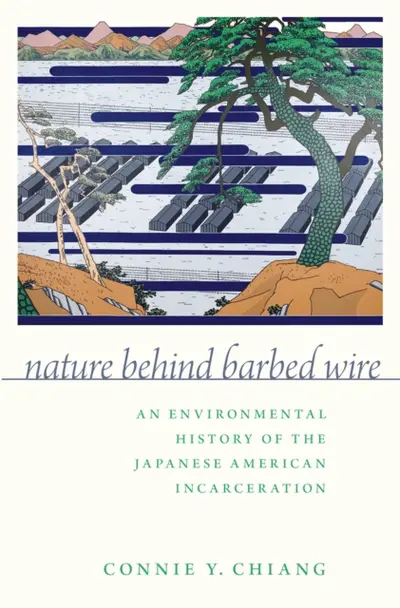
Nature Behind Barbed Wire
An Environmental History of the Japanese American Incarceration
Price and availability
$24.99
Available in: Andorra, Austria, Australia, Belgium, Bulgaria, Canada, Switzerland, Cyprus, Czechia, Germany, Denmark, Estonia, Spain, Finland, France, United Kingdom, Guernsey, Greece, Croatia, Hungary, Ireland, Isle of Man, Iceland, Italy, Jersey, Japan, Liechtenstein, Lithuania, Luxembourg, Latvia, Monaco, Malta, Netherlands, Norway, Poland, Portugal, Romania, Sweden, Slovenia, Slovakia, San Marino, United States, Vatican City, South Africa
Stores: US, UK, Canada, EU, Australia.
Sign in to buyThe price is re-checked by the server before payment.
For personal use under the eBook licence.
- Format
- DRM
- Not stated by the publisher
- Language
- English
- Publisher
- Oxford University Press
- Published
- 2 August 2018
- ISBN
- 9780190842079
- Subjects
- Japan, USA, 20th century, c 1939 to c 1945 (including WW2), History of the Americas, 20th century history: c 1900 to c 2000, Military history, Second World War, Archaeology, Prisoners of war, United States of America, USA, 3MP, 3MPBLB, Prisoners of war, NH, NHK, NHW, NHWR7, NK
About this book
The mass imprisonment of over 110,000 people of Japanese ancestry during World War II was one of the most egregious violations of civil liberties in United States history. Removed from their homes on the temperate Pacific Coast, Japanese Americans spent the war years in desolate camps in the nation's interior. Photographers including Ansel Adams and Dorothea Lange visually captured these camps in images that depicted the environment as a source of both hope and hardship. And yet the literature on incarceration has most often focused on the legal and citizenship statuses of the incarcerees, their political struggles with the US government, and their oral testimony. Nature Behind Barbed Wire shifts the focus to the environment. It explores how the landscape shaped the experiences of both Japanese Americans and federal officials who worked for the War Relocation Authority (WRA), the civilian agency that administered the camps. The complexities of the natural world both enhanced and constrained the WRA's power and provided Japanese Americans with opportunities to redefine the terms and conditions of their confinement. Even as the environment compounded their feelings of despair and outrage, the incarcerees also found that their agency in transforming and adapting to the natural world could help them survive and contest their incarceration. Japanese Americans and WRA officials negotiated the terms of confinement with each other and with a dynamic natural world. Ultimately, as Connie Chiang demonstrates, the Japanese American incarceration was fundamentally an environmental story.
Bibliographic data © Gardners Books Ltd.