PDF · English
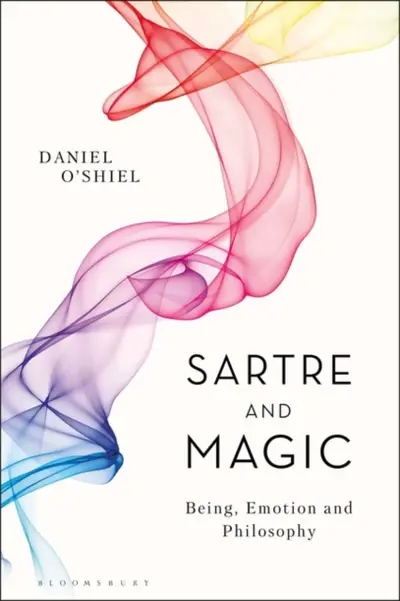
Sartre and Magic
Being, Emotion and Philosophy
Price and availability
$40.99
Available in: Andorra, Austria, Australia, Belgium, Bulgaria, Canada, Switzerland, Cyprus, Czechia, Germany, Denmark, Estonia, Spain, Finland, France, United Kingdom, Guernsey, Greece, Croatia, Hungary, Ireland, Isle of Man, Iceland, Italy, Jersey, Japan, Liechtenstein, Lithuania, Luxembourg, Latvia, Monaco, Malta, Netherlands, Norway, Poland, Portugal, Romania, Sweden, Slovenia, Slovakia, San Marino, United States, Vatican City, South Africa
Stores: US, UK, Canada, EU, Australia.
Sign in to buyThe price is re-checked by the server before payment.
For personal use under the eBook licence.
- Format
- DRM
- Not stated by the publisher
- Language
- English
- Publisher
- Bloomsbury Publishing
- Published
- 27 June 2019
- Pages
- 208
- ISBN
- 9781350077676
- Subjects
- Phenomenology & Existentialism, Social & political philosophy, Social & cultural anthropology, ethnography, Psychology: emotions, Social and cultural anthropology, Psychology: emotions, QDHR5, QDTS
About this book
Jean-Paul Sartre's technical and multifaceted concept of magic is central for understanding crucial elements of his early philosophy (1936-1943), not least his conception of the ego, emotion, the imaginary and value. Daniel O'Shiel follows the thread of magic throughout Sartre's early philosophical work. Firstly, Sartre's work on the ego (1936) shows a personal, reflective form of consciousness that is magically hypostasized onto the pre-reflective level. Secondly, emotion (1938) is inherently magical for Sartre because emotive qualities come to inhere in objects and thereby transform a world of pragmatism into one of captivation. Thirdly, analyses of The Imaginary (1940) reveal that anything we imagine is a spontaneous creation of consciousness that has the power to enchant and immerse us, even to the point of images holding sway over us. Culminating with Sartre's ontological system of Being and Nothingness (1943), O'Shiel argues that Sartre does not do away with the concept, but in fact provides ontological roots for it. This is most evident in Sartre's analyses of value, possession and language.A second part shows how such Sartrean magic is highly relevant for a number of concrete case studies: the arts, advertising, racism and stupidity, and certain instances of psychopathology. O'Shiel shows that Sartre's magical being is important for any contemporary philosophical anthropology because it is essentially at work at the heart of many of our most significant experiences, both creative and damaging.
Bibliographic data © Gardners Books Ltd.