PDF · English
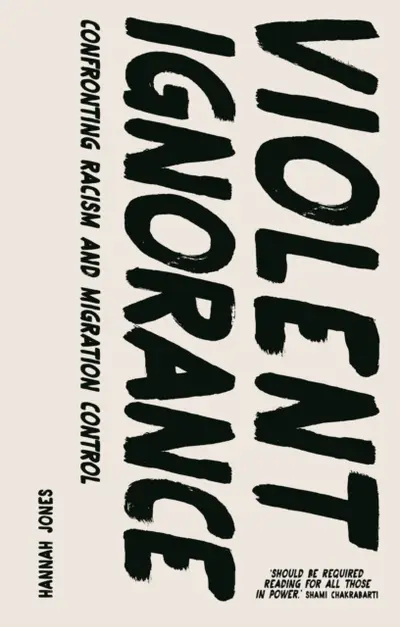
Violent Ignorance
Confronting Racism and Migration Control
Price and availability
$29.99
Available in: Andorra, Austria, Australia, Belgium, Bulgaria, Canada, Switzerland, Cyprus, Czechia, Germany, Denmark, Estonia, Spain, Finland, France, United Kingdom, Guernsey, Greece, Croatia, Hungary, Ireland, Isle of Man, Iceland, Italy, Jersey, Japan, Liechtenstein, Lithuania, Luxembourg, Latvia, Monaco, Malta, Netherlands, Norway, Poland, Portugal, Romania, Sweden, Slovenia, Slovakia, San Marino, United States, Vatican City, South Africa
Stores: US, UK, Canada, EU, Australia.
Sign in to buyThe price is re-checked by the server before payment.
For personal use under the eBook licence.
- Format
- DRM
- Not stated by the publisher
- Language
- English
- Publisher
- Bloomsbury Publishing
- Published
- 28 January 2021
- Pages
- 264
- ISBN
- 9781786998613
- Subjects
- National liberation & independence, post-colonialism, Social discrimination & inequality, Migration, immigration & emigration, JBFA, JBFH, NHTR
About this book
An elected politician is assassinated in the street by a terrorist associated with extreme political groups, and the national response is to encourage picnics. Thousands of people are held in prison-like conditions without judicial oversight or any time-limit on their sentence . An attempt to re-assert national sovereignty and borders leads thousands of citizens to register for dual citizenship with other countries, some overcoming family associations with genocide in their second country of nationality to do so. This is life in the UK today. How then are things still continuing as 'normal'? How can we confront these phenomena and why do we so often refuse to? What are the practices that help us to accommodate the unconscionable? How might we contend with the horrors that meet us each day, rather than becoming desensitized to them? Violent Ignorance sets out to examine these questions through an understanding of how the past persists in the present, how trauma is silenced or reappears, and how we might reimagine identity and connection in ways that counter - rather than ignore - historic violence. In particular Hannah Jones shows how border controls and enforcement, and its corollary, racism and violence, have shifted over time. Drawing on thinkers from John Berger to Ben Okri, from Audre Lorde to Susan Sontag, the book questions what it means to belong, and discusses how hierarchies of belonging are revealed by what we can see, and what we can ignore.
Bibliographic data © Gardners Books Ltd.