EPUB · English
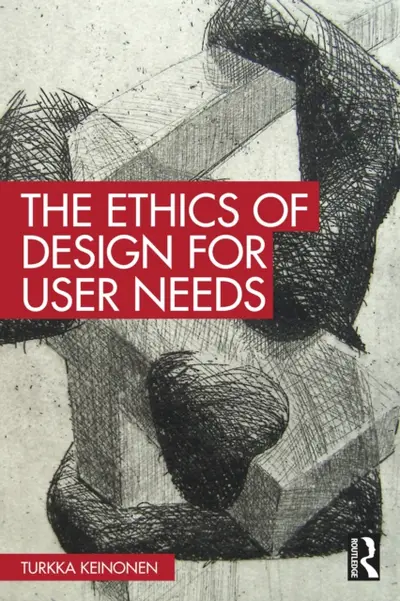
Ethics of Design for User Needs
Price and availability
$64.99
Available in: Andorra, Austria, Australia, Belgium, Bulgaria, Canada, Switzerland, Cyprus, Czechia, Germany, Denmark, Estonia, Spain, Finland, France, United Kingdom, Guernsey, Greece, Croatia, Hungary, Ireland, Isle of Man, Iceland, Italy, Jersey, Japan, Liechtenstein, Lithuania, Luxembourg, Latvia, Monaco, Malta, Netherlands, Norway, Poland, Portugal, Romania, Sweden, Slovenia, Slovakia, San Marino, United States, Vatican City, South Africa
Stores: US, UK, Canada, EU, Australia.
Sign in to buyThe price is re-checked by the server before payment.
For personal use under the eBook licence.
- Format
- EPUB
- DRM
- Not stated by the publisher
- Language
- English
- Publisher
- Taylor & Francis
- Published
- 1 August 2024
- ISBN
- 9781040096925
- Subjects
- The arts: general issues, Product design, Ethics & moral philosophy, Engineering: general, Ergonomics, Hydraulic engineering, Ethical & social aspects of IT, Legal aspects of IT, Computer science, Product design, Ethics and moral philosophy
About this book
This book offers an inquiry into the ethics of 'human needs capture' for design purposes by drawing upon ethical theories and narratives. Designers have historically relied upon the satisfaction of human needs as a moral justification for their profession. This volume offers an alternative critique to challenge this perspective, arguing that seeking to satisfy needs doesn't offer sufficient moral justification on its own. It presents an extensive ethical analysis of the notion of need and develops a thought-provoking case for a plural reconceptualisation of the notion of 'need' as user-based knowledge about product and service improvement opportunities. It does this by drawing upon a range of ethical approaches including Soran Reader's needs ethics, classical utilitarianism, Robert Nozick's libertarian philosophy, and John Rawls' theory of justice. The book goes on to link these approaches to concepts guiding design such as human-centred design, collaborative design, and end user innovation. Written as a dialogue between a designer and his consciousness, the book underlines the deliberative nature of applied design ethics, and also highlights how consciousness challenges designers to solve their moral dilemmas. This engaging format invites readers to become an intimate part of the 'discussion'. This book will be of interest to students and academics studying product design, industrial design, interaction design, user experience design, design ethics, and sustainable development.
Bibliographic data © Gardners Books Ltd.