EPUB · English
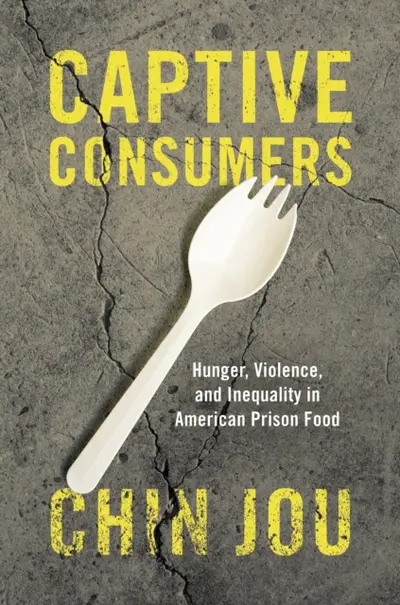
Captive Consumers
Hunger, Violence, and Inequality in American Prison Food
Price and availability
$202.99
Available in: Andorra, Austria, Australia, Belgium, Bulgaria, Canada, Switzerland, Cyprus, Czechia, Germany, Denmark, Estonia, Spain, Finland, France, United Kingdom, Guernsey, Greece, Croatia, Hungary, Ireland, Isle of Man, Iceland, Italy, Jersey, Japan, Liechtenstein, Lithuania, Luxembourg, Latvia, Monaco, Malta, Netherlands, Norway, Poland, Portugal, Romania, Sweden, Slovenia, Slovakia, San Marino, United States, Vatican City, South Africa
Stores: US, UK, Canada, EU, Australia.
Sign in to buyThe price is re-checked by the server before payment.
For personal use under the eBook licence.
- Format
- EPUB
- DRM
- Not stated by the publisher
- Language
- English
- Publisher
- The University of North Carolina Press
- Published
- 4 August 2026
- ISBN
- 9781469693187
- Subjects
- USA, Food & society, Social discrimination & inequality, Penology & punishment, United States of America, USA, History of the Americas
About this book
Much of what happens inside Americas prisons remains hidden from public view, and the food doled out to incarcerated people is no exception. In Captive Consumers, Chin Jou exposes a system of mistreatment and scandal surrounding prison food: across the country, those behind bars live with chronic hunger, eat foods contrary to their religious beliefs and medical needs, and develop foodborne illnesses at alarming rates. At the same time, corrections systems and prison food services weaponize nutritional claims to protect themselves from charges that the incarcerated are starving.Using a wealth of sources from untapped historical records to prison newspapers, Jou excavates the voices of the incarcerated and shows that prison food dehumanizes the imprisoned, compounds racial and class inequalities, and induces more violenceultimately making carceral institutions more dangerous. But this compelling book also illuminates how people behind bars have reasserted their identities, resourcefulness, and humanity through self-prepared food even as prison food services profit from lucrative, taxpayer-funded contracts that reward cost-cutting over care. If US corrections systems continue to perpetuate physical and psychological violence through food, Jou argues, Americans will suffer not just wasted tax dollars but the cost of bringing traumatized, ailing, and hungry formerly incarcerated people back into society.
Bibliographic data © Gardners Books Ltd.