EPUB · English
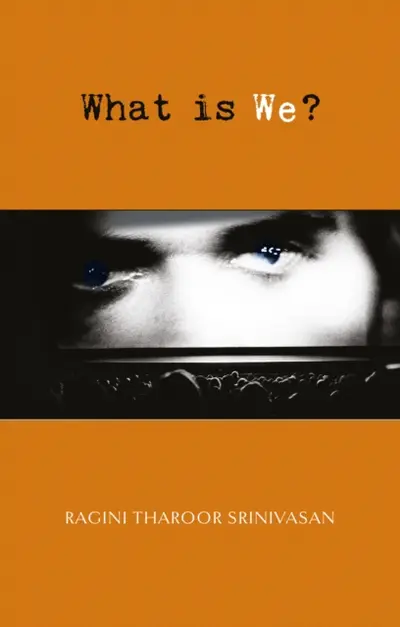
What is We?
Price and availability
$33.99
Available in: Andorra, Austria, Australia, Belgium, Bulgaria, Canada, Switzerland, Cyprus, Czechia, Germany, Denmark, Estonia, Spain, Finland, France, United Kingdom, Guernsey, Greece, Croatia, Hungary, Ireland, Isle of Man, Iceland, Italy, Jersey, Japan, Liechtenstein, Lithuania, Luxembourg, Latvia, Monaco, Malta, Netherlands, Norway, Poland, Portugal, Romania, Sweden, Slovenia, Slovakia, San Marino, United States, Vatican City, South Africa
Stores: US, UK, Canada, EU, Australia.
Sign in to buyThe price is re-checked by the server before payment.
For personal use under the eBook licence.
- Format
- EPUB
- DRM
- Not stated by the publisher
- Language
- English
- Publisher
- Edinburgh University Press
- Published
- 30 October 2025
- ISBN
- 9781788218399
- Subjects
- Literary theory, Philosophy: metaphysics & ontology, Philosophy: epistemology & theory of knowledge, Feminism & feminist theory, Social groups, Ethnic studies, Ethnic minorities & multicultural studies, Sociology, Social theory, Literary theory, Feminism and feminist theory, Ethnic groups and multicultural studies, Social theory, Philosophy: epistemology and theory of knowledge
About this book
The concept "e;we"e; is central to every field in the interdisciplinary humanities and social sciences, yet it has been overdetermined by the question of "e;who we are"e;, leaving its basic conceptual operations undertheorized.In What is We? Ragini Tharoor Srinivasan argues that "e;we"e; is not a collective to belong to or be excluded from, nor is it a specific group to be identified. Rather, "e;we"e; functions as a method - one that organizes inclusion and exclusion, communion and isolation, coercion and liberation, division and incorporation, forgetting and remembering.Across ten linked chapters, the book unfolds social, historical, political, grammatical, linguistic, literary, and personal responses to its titular question. By seeing "e;we"e; as a method for enacting, apprehending, contesting, and instrumentalizing boundaries, it invites us to confront the challenge of failure, embrace the possibility of impossibility, and acknowledge the hallucinatory nature of the universal.
Bibliographic data © Gardners Books Ltd.