EPUB · English
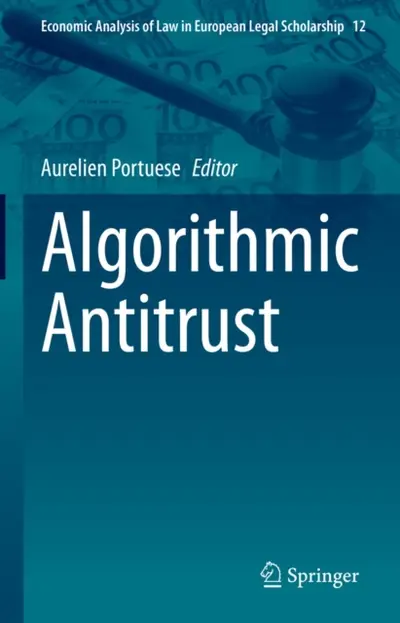
Algorithmic Antitrust
Price and availability
$202.99
Available in: Andorra, Austria, Australia, Belgium, Bulgaria, Canada, Switzerland, Cyprus, Czechia, Germany, Denmark, Estonia, Spain, Finland, France, United Kingdom, Guernsey, Greece, Croatia, Hungary, Ireland, Isle of Man, Iceland, Italy, Jersey, Japan, Liechtenstein, Lithuania, Luxembourg, Latvia, Monaco, Malta, Netherlands, Norway, Poland, Portugal, Romania, Sweden, Slovenia, Slovakia, San Marino, United States, Vatican City, South Africa
Stores: US, UK, Canada, EU, Australia.
Sign in to buyThe price is re-checked by the server before payment.
For personal use under the eBook licence.
- Format
- EPUB
- DRM
- Not stated by the publisher
- Language
- English
- Publisher
- Springer International Publishing
- Published
- 21 January 2022
- ISBN
- 9783030858599
- Subjects
- Jurisprudence & general issues, International law, International economic & trade law, Competition law / Antitrust law, Entertainment & media law, Algorithms & data structures, International law, Public international law: economic and trade, Entertainment and media law
About this book
Algorithms are ubiquitous in our daily lives. They affect the way we shop, interact, and make exchanges on the marketplace. In this regard, algorithms can also shape competition on the marketplace. Companies employ algorithms as technologically innovative tools in an effort to edge out competitors. Antitrust agencies have increasingly recognized the competitive benefits, but also competitive risks that algorithms entail. Over the last few years, many algorithm-driven companies in the digital economy have been investigated, prosecuted and fined, mostly for allegedly unfair algorithm design. Legislative proposals aim at regulating the way algorithms shape competition. Consequently, a so-called "e;algorithmic antitrust"e; theory and practice have also emerged. This book provides a more innovation-driven perspective on the way antitrust agencies should approach algorithmic antitrust. To date, the analysis of algorithmic antitrust has predominantly been shaped by pessimistic approaches to the risks of algorithms on the competitive environment. With the benefit of the lessons learned over the last few years, this book assesses whether these risks have actually materialized and whether antitrust laws need to be adapted accordingly. Effective algorithmic antitrust requires to adequately assess the pro- and anti-competitive effects of algorithms on the basis of concrete evidence and innovation-related concerns. With a particular emphasis on the European perspective, this book brings together experts and scrutinizes on the implications of algorithmic antitrust for regulation and innovation.
Bibliographic data © Gardners Books Ltd.