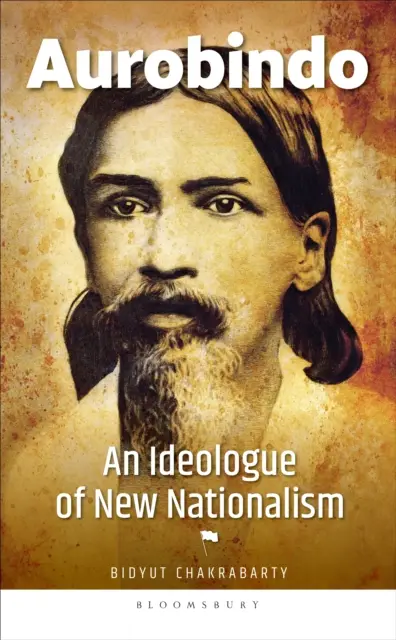
EPUB · English
Aurobindo
An Ideologue of New Nationalism
Price and availability
$103.99
Available in: Andorra, Austria, Australia, Belgium, Bulgaria, Canada, Switzerland, Cyprus, Czechia, Germany, Denmark, Estonia, Spain, Finland, France, United Kingdom, Guernsey, Greece, Croatia, Hungary, Ireland, Isle of Man, Iceland, Italy, Jersey, Japan, Liechtenstein, Lithuania, Luxembourg, Latvia, Monaco, Malta, Netherlands, Norway, Poland, Portugal, Romania, Sweden, Slovenia, Slovakia, San Marino, United States, Vatican City, South Africa
Stores: US, UK, Canada, EU, Australia.
Sign in to buyThe price is re-checked by the server before payment.
For personal use under the eBook licence.
- Format
- EPUB
- DRM
- Not stated by the publisher
- Language
- English
- Publisher
- Bloomsbury Publishing
- Published
- 30 March 2024
- Pages
- 342
- ISBN
- 9789356404632
- Subjects
- Colonialism & imperialism, Political leaders & leadership, Political leaders and leadership, NHTQ
About this book
This book elaborates the politico-ideological viewpoints of Aurobindo, as displayed when he reigned as one of the major nationalist leaders defining Indian nationalism. Bidyut Chakrabarty examines Aurobindo's politico-ideological ideas during the period (1893-1910) when he was an active participant in the 'New Nationalist' or 'Democratic Nationalist' campaign, which started with the bifurcation of the Indian National Congress between the Moderates and Extremists (also known as the Revolutionary Nationalists) in its 1907 annual session, held at Surat.Chapters cover Aurobindo's distinctive ideas of nationalism, which he evolved in collaboration with his colleagues, especially Lal-Bal-Pal (Lala Lajpat Rai, Bal Gangadhar Tilak, and Bipin Chandra Pal), and how he redefined the practice of nationalism. The book also demonstrates that unlike his predecessors, the Moderates, Aurobindo set out many strategies - including boycott and passive resistance - to execute the distinctive plan he designed to attain his politico-ideological goal. Other topics include the relatively less discussed aspect of Aurobindo's socio-political ideas, namely his unique model of education as an antidote to many of the crippling socio-cultural prejudices, and the importance of Bhagavad Gita in shaping Aurobindo's politico-ideological priorities.
Bibliographic data © Gardners Books Ltd.