PDF · English
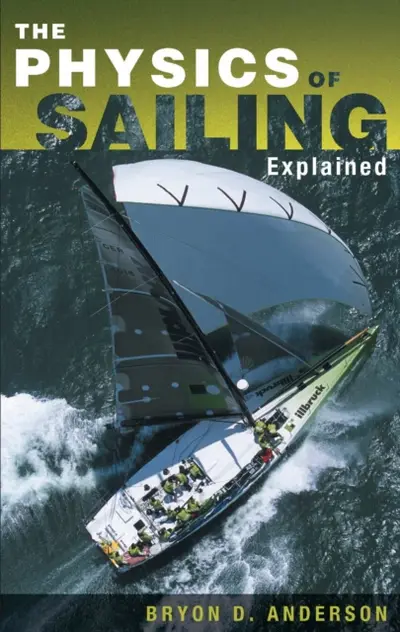
Physics of Sailing Explained
Price and availability
$22.99
Available in: Andorra, Austria, Australia, Belgium, Bulgaria, Canada, Switzerland, Cyprus, Czechia, Germany, Denmark, Estonia, Spain, Finland, France, United Kingdom, Guernsey, Greece, Croatia, Hungary, Ireland, Isle of Man, Iceland, Italy, Jersey, Japan, Liechtenstein, Lithuania, Luxembourg, Latvia, Monaco, Malta, Netherlands, Norway, Poland, Portugal, Romania, Sweden, Slovenia, Slovakia, San Marino, United States, Vatican City, South Africa
Stores: US, UK, Canada, EU, Australia.
Sign in to buyThe price is re-checked by the server before payment.
For personal use under the eBook licence.
- Format
- DRM
- Not stated by the publisher
- Language
- English
- Publisher
- Globe Pequot Publishing
- Published
- 12 September 2023
- ISBN
- 9781493083725
- Subjects
- Physics, Sailing, Sailing / yachting, Shipbuilding technology, engineering and trades, Marine engineering, Ships and boats: general interest
About this book
What is the best shape for a sailboat? How does turbulence affect a sailboat's movement through the water? Why do some keels have wings? Is it true that some sailboats can sail faster upwind than downwind?Authoritative yet accessible, The Physics of Sailing Explained is the perfect book for all those sailors who want to enhance their understanding and enjoyment of life at sea. It will enable cruisers and racers alike to better grasp how sails, keels, and hulls work together to keep boats afloat, and will sharpen their skills with a more subtle and thorough appreciation of why various boat design features are present and why certain tactics work in certain situations. Anderson outlines the science behind sailing in a way that anyone can understand and benefit from without having to trudge through a physics text or became a naval architect. Concepts are conveyed simply, concisely, and with many examples and illustrations.With the help of this invaluable book, sailors will be better prepared to handle any situations that might arise on the water.
Bibliographic data © Gardners Books Ltd.