EPUB · English
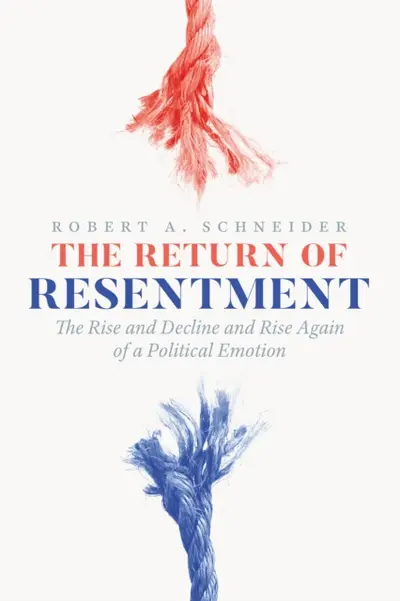
Return of Resentment
The Rise and Decline and Rise Again of a Political Emotion
Price and availability
$33.99
Available in: Andorra, Austria, Australia, Belgium, Bulgaria, Canada, Switzerland, Cyprus, Czechia, Germany, Denmark, Estonia, Spain, Finland, France, United Kingdom, Guernsey, Greece, Croatia, Hungary, Ireland, Isle of Man, Iceland, Italy, Jersey, Japan, Liechtenstein, Lithuania, Luxembourg, Latvia, Monaco, Malta, Netherlands, Norway, Poland, Portugal, Romania, Sweden, Slovenia, Slovakia, San Marino, United States, Vatican City, South Africa
Stores: US, UK, Canada, EU, Australia.
Sign in to buyThe price is re-checked by the server before payment.
For personal use under the eBook licence.
- Format
- EPUB
- DRM
- Not stated by the publisher
- Language
- English
- Publisher
- University of Chicago Press
- Published
- 17 January 2023
- ISBN
- 9780226586571
- Subjects
- c 1800 to c 1900, linguistics, Historical & comparative linguistics, History, Modern history to 20th century: c 1700 to c 1900, Social & political philosophy, Conservatism & right-of-centre democratic ideologies, Historical and comparative linguistics, Political ideologies and movements, History, General and world history, Social and political philosophy
About this book
Charts the long history of resentment, from its emergence to its establishment as the word of the moment. The term "e;resentment,"e; often casually paired with words like "e;hatred,"e; "e;rage,"e; and "e;fear,"e; has dominated US news analysis since November 2016. Despite its increased use, this word seems to defy easy categorization. Does "e;resentment"e; describe many interlocking sentiments, or is it just another way of saying "e;anger"e;? Does it suggest an irrational grievance, as opposed to a legitimate callout of injustice? Does it imply political leanings, or is it nonpartisan by nature? In The Return of Resentment, Robert A. Schneider explores these questions and more, moving from eighteenth-century Britain to the aftermath of the French Revolution to social movements throughout the twentieth century. Drawing on a wide range of writers, thinkers, and historical experiences, Schneider illustrates how resentment has morphed across time, coming to express a collective sentiment felt by people and movements across the political spectrum. In this history, we discover resentment's modernity and its ambiguity-how it can be used to dismiss legitimate critique and explain away violence, but also convey a moral stance that demands recognition. Schneider anatomizes the many ways resentment has been used to label present-day movements, from followers of Trump and supporters of Brexit to radical Islamicists and proponents of identity politics. Addressing our contemporary political situation in a novel way, The Return of Resentment challenges us to think critically about the roles different emotions play in politics.
Bibliographic data © Gardners Books Ltd.