EPUB · English
High Life
Condo Living in the Suburban Century
Price and availability
$33.99
Available in: Andorra, Austria, Australia, Belgium, Bulgaria, Canada, Switzerland, Cyprus, Czechia, Germany, Denmark, Estonia, Spain, Finland, France, United Kingdom, Guernsey, Greece, Croatia, Hungary, Ireland, Isle of Man, Iceland, Italy, Jersey, Japan, Liechtenstein, Lithuania, Luxembourg, Latvia, Monaco, Malta, Netherlands, Norway, Poland, Portugal, Romania, Sweden, Slovenia, Slovakia, San Marino, United States, Vatican City, South Africa
Stores: US, UK, Canada, EU, Australia.
Sign in to buyThe price is re-checked by the server before payment.
For personal use under the eBook licence.
- Format
- EPUB
- DRM
- Not stated by the publisher
- Language
- English
- Publisher
- Yale University Press
- Published
- 4 April 2023
- Pages
- 336
- ISBN
- 9780300269345
- Subjects
- USA, History of art / art & design styles, Architecture, Houses, apartments, flats, etc, United States of America, USA, AGA, Architecture, AMK
About this book
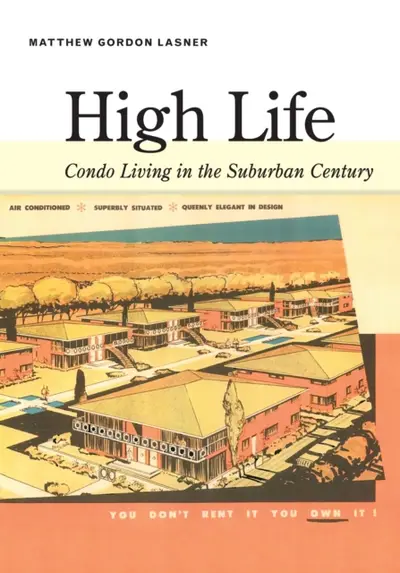
The first comprehensive architectural and cultural history of condominium and cooperative housing in twentieth-century America. Today, one in five homeowners in American cities and suburbs lives in a multifamily home rather than a single-family house. As the American dream evolves, precipitated by rising real estate prices and a renewed interest in urban living, many predict that condos will become the predominant form of housing in the twenty-first century. In this unprecedented study, Matthew Gordon Lasner explores the history of co-owned multifamily housing in the United States, from New York City's first co-op, in 1881, to contemporary condominium and townhouse complexes coast to coast. Lasner explains the complicated social, economic, and political factors that have increased demand for this way of living, situating the trend within the larger housing market and broad shifts in residential architecture and family life. He contrasts the prevalence and popularity of condos, townhouses, and other privately governed communities with their ambiguous economic, legal, and social standing, as well as their striking absence from urban and architectural history.
Bibliographic data © Gardners Books Ltd.