EPUB · English
Continuing Dialogue
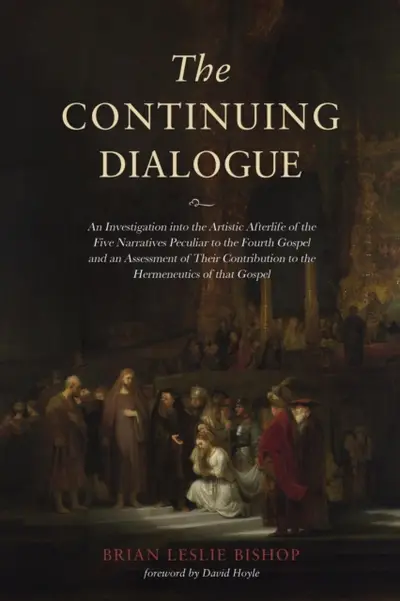
An Investigation into the Artistic Afterlife of the Five Narratives Peculiar to the Fourth Gospel and an Assessment of Their Contribution to the Hermeneutics of that Gospel
Price and availability
$36.99
Available in: Andorra, Austria, Australia, Belgium, Bulgaria, Canada, Switzerland, Cyprus, Czechia, Germany, Denmark, Estonia, Spain, Finland, France, United Kingdom, Guernsey, Greece, Croatia, Hungary, Ireland, Isle of Man, Iceland, Italy, Jersey, Japan, Liechtenstein, Lithuania, Luxembourg, Latvia, Monaco, Malta, Netherlands, Norway, Poland, Portugal, Romania, Sweden, Slovenia, Slovakia, San Marino, United States, Vatican City, South Africa
Stores: US, UK, Canada, EU, Australia.
Sign in to buyThe price is re-checked by the server before payment.
For personal use under the eBook licence.
- Format
- EPUB
- DRM
- Not stated by the publisher
- Language
- English
- Publisher
- Wipf and Stock Publishers
- Published
- 20 July 2017
- ISBN
- 9781498244053
- Subjects
- Christianity, Criticism and exegesis of sacred texts
About this book
The I AM statements exclusive to the Fourth Gospel are seen as the attempt of the author(s) of that Gospel to present the nature and purpose of the earthly life of Jesus by engaging the imaginative faculty of the reader. Succeeding generations of artists are considered as undertaking a similar task by engaging in an imaginative dialogue with the text. There are five narratives that are peculiar to the Fourth Gospel: The Wedding at Cana, the Woman of Samaria, the Woman Taken in Adultery, the Raising of Lazarus, and the Washing of Feet. Five paintings based upon each narrative are considered in context. These are taken from the early fourteenth century (Duccio and Giotto) to the twentieth and twenty-first centuries (Max Beckmann and the contemporary Icon writer, Constantina Wood). A sense of the loss experienced by the western church under the sanctions of the Protestant Reformation against visual imagery is conveyed. This leads to a suggestion that a reassertion of the role of the aesthetics of Christian worship might be a unifying factor for a generation jaded by the pedantry that divides the Christian Church.
Bibliographic data © Gardners Books Ltd.