PDF · English
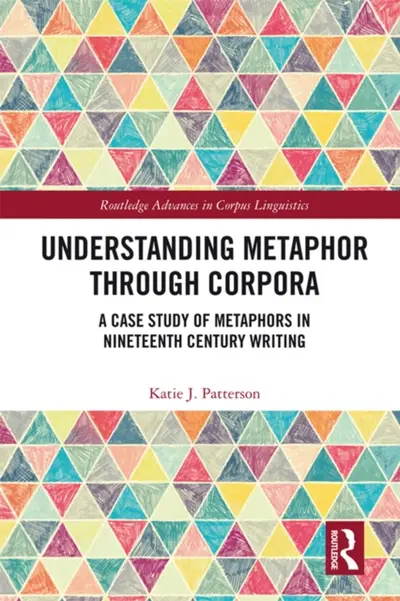
Understanding Metaphor through Corpora
A Case Study of Metaphors in Nineteenth Century Writing
Price and availability
$64.99
Available in: Andorra, Austria, Australia, Belgium, Bulgaria, Canada, Switzerland, Cyprus, Czechia, Germany, Denmark, Estonia, Spain, Finland, France, United Kingdom, Guernsey, Greece, Croatia, Hungary, Ireland, Isle of Man, Iceland, Italy, Jersey, Japan, Liechtenstein, Lithuania, Luxembourg, Latvia, Monaco, Malta, Netherlands, Norway, Poland, Portugal, Romania, Sweden, Slovenia, Slovakia, San Marino, United States, Vatican City, South Africa
Stores: US, UK, Canada, EU, Australia.
Sign in to buyThe price is re-checked by the server before payment.
For personal use under the eBook licence.
- Format
- DRM
- Not stated by the publisher
- Language
- English
- Publisher
- Taylor & Francis
- Published
- 11 May 2018
- ISBN
- 9781351241083
- Subjects
- c 1800 to c 1900, Language: reference & general, Language: history & general works, linguistics, Semantics, discourse analysis, etc, Lexicography, Literary studies: c 1800 to c 1900, Psycholinguistics and cognitive linguistics, Semantics, discourse analysis, stylistics, Computational and corpus linguistics
About this book
This book introduces a unique methodology to the study of metaphor, integrating a corpus linguistic approach to explore the lexical, grammatical, semantic, and pragmatic characteristics of metaphoric instances of language. The volume questions the reliability of attempts to identify metaphor based on dichotomy and, drawing on data from a corpus of nineteenth-century writing, instead advocates for the notion that metaphoricity is context-dependent and fluid, in relation to the respective social and discourse contexts in which metaphors can be found. The book also applies Lexical Priming Theory to metaphoric language to suggest that our use of metaphor is due to unconscious behaviors, a counterpoint to perspectives that see metaphor use as part of the creative process. Taken as a whole, the volume calls for a deeper investigation of the complex web of meaning senses that contributes to our understanding of metaphor, making this key reading for students and researchers in corpus linguistics, metaphor studies, lexicography, semantics, and pragmatics.
Bibliographic data © Gardners Books Ltd.