PDF · English
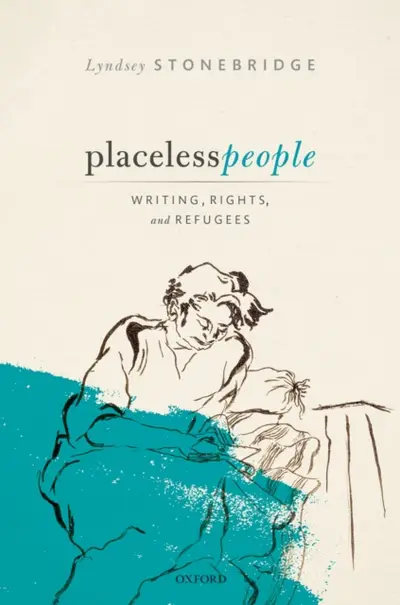
Placeless People
Writings, Rights, and Refugees
Price and availability
$32.99
Available in: Andorra, Austria, Australia, Belgium, Bulgaria, Canada, Switzerland, Cyprus, Czechia, Germany, Denmark, Estonia, Spain, Finland, France, United Kingdom, Guernsey, Greece, Croatia, Hungary, Ireland, Isle of Man, Iceland, Italy, Jersey, Japan, Liechtenstein, Lithuania, Luxembourg, Latvia, Monaco, Malta, Netherlands, Norway, Poland, Portugal, Romania, Sweden, Slovenia, Slovakia, San Marino, United States, Vatican City, South Africa
Stores: US, UK, Canada, EU, Australia.
Sign in to buyThe price is re-checked by the server before payment.
For personal use under the eBook licence.
- Format
- DRM
- Not stated by the publisher
- Language
- English
- Publisher
- Oxford University Press
- Published
- 10 November 2018
- ISBN
- 9780192517364
- Subjects
- Literary studies: from c 1900 -, Literary studies: fiction, novelists & prose writers, Refugees & political asylum, Human rights, Civil rights & citizenship, Literary studies: c 1900 to c 2000, Literary studies: fiction, novelists and prose writers, Refugees and political asylum, Human rights, civil rights
About this book
In 1944 the political philosopher and refugee, Hannah Arendt wrote: 'Everywhere the word 'exile' which once had an undertone of almost sacred awe, now provokes the idea of something simultaneously suspicious and unfortunate.' Today's refugee 'crisis' has its origins in the political-and imaginative-history of the last century. Exiles from other places have often caused trouble for ideas about sovereignty, law and nationhood. But the meanings of exile changed dramatically in the twentieth century. This book shows just how profoundly the calamity of statelessness shaped modern literature and thought. For writers such as Hannah Arendt, Franz Kafka, W.H. Auden, George Orwell, Samuel Beckett, Simone Weil, among others, the outcasts of the twentieth century raised vital questions about sovereignty, humanism and the future of human rights. Placeless People argues that we urgently need to reconnect with the moral and political imagination of these first chroniclers of the placeless condition.
Bibliographic data © Gardners Books Ltd.