EPUB · English
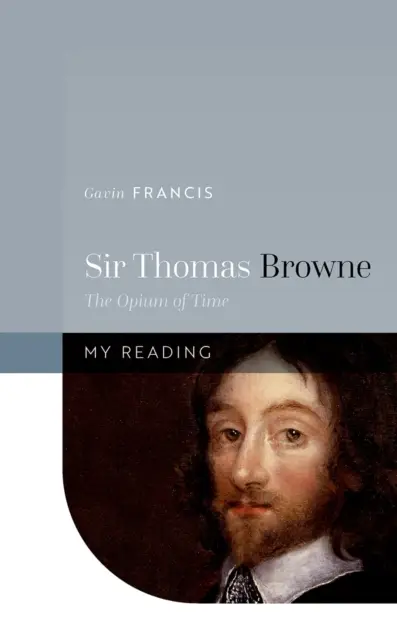
Sir Thomas Browne
The Opium of Time
Price and availability
$18.99
Available in: Andorra, Austria, Australia, Belgium, Bulgaria, Canada, Switzerland, Cyprus, Czechia, Germany, Denmark, Estonia, Spain, Finland, France, United Kingdom, Guernsey, Greece, Croatia, Hungary, Ireland, Isle of Man, Iceland, Italy, Jersey, Japan, Liechtenstein, Lithuania, Luxembourg, Latvia, Monaco, Malta, Netherlands, Norway, Poland, Portugal, Romania, Sweden, Slovenia, Slovakia, San Marino, United States, Vatican City, South Africa
Stores: US, UK, Canada, EU, Australia.
Sign in to buyThe price is re-checked by the server before payment.
For personal use under the eBook licence.
- Format
- EPUB
- DRM
- Not stated by the publisher
- Language
- English
- Publisher
- Oxford University Press
- Published
- 15 April 2023
- ISBN
- 9780192673909
- Subjects
- c 1500 to c 1600, c 1600 to c 1700, Literary studies: general, Literary studies: c 1500 to c 1800, Early modern history: c 1450/1500 to c 1700, History of medicine, Literary studies: general, History of medicine, History
About this book
In this book, Gavin Francis writes about the resonance for him as a medic in reading the work of early modern polymath Sir Thomas Browne.Sir Thomas Browne (1605-1682) was an English physician, wordsmith, and polymath who contributed hundreds of words to the English language (such as medical, electricity, migrant, and computer). After studying medicine in Montpellier, Padua, and Leiden, he settled in Norwich, where he practised as a doctor and wrote some of the greatest books of the seventeenth century, still read for their accessibility and eloquence. In Sir Thomas Browne: The Opium of Time, Dr Gavin Francis examines Browne's work through a variety of themes: ambiguity, curiosity, vitality, piety, humility, misogyny, mobility, and mortality. He argues that the work has lost little of its power and wisdom, and none of its beauty. Religio Medici ('Religion of the Doctor') examined the vexed question of faith in a God who, to a physician, seemed indifferent to suffering. Pseudodoxia Epidemica ('Vulgar Errors') gave free rein to an agile curiosity and sought to debunk notions then commonly believed, such as that dead kingfishers indicate the direction of the wind, or that a woman could get pregnant from sharing a bath with a man. Urne Buriall was Browne's meditation on mortality, occasioned by a find of funerary urns, while Museum Clausum ('Hidden Museum') set out a series of thought experiments and counterfactuals, such as how history might have been different had Alexander the Great marched west instead of east. Gavin Francis draws on his own experiences as a twenty-first century writer and doctor to discover that although many centuries separate him from Browne, they share a fundamental curiosity about the world and about people.
Bibliographic data © Gardners Books Ltd.