PDF · English
Historian's Eye
Photography, History, and the American Present
Price and availability
$21.99
Available in: Andorra, Austria, Australia, Belgium, Bulgaria, Canada, Switzerland, Cyprus, Czechia, Germany, Denmark, Estonia, Spain, Finland, France, United Kingdom, Guernsey, Greece, Croatia, Hungary, Ireland, Isle of Man, Iceland, Italy, Jersey, Japan, Liechtenstein, Lithuania, Luxembourg, Latvia, Monaco, Malta, Netherlands, Norway, Poland, Portugal, Romania, Sweden, Slovenia, Slovakia, San Marino, United States, Vatican City, South Africa
Stores: US, UK, Canada, EU, Australia.
Sign in to buyThe price is re-checked by the server before payment.
For personal use under the eBook licence.
- Format
- DRM
- Not stated by the publisher
- Language
- English
- Publisher
- The University of North Carolina Press
- Published
- 26 March 2019
- ISBN
- 9798890855909
- Subjects
- USA, c 2010 to c 2020, Photography & photographs, Photographic reportage, History of the Americas, United States of America, USA, History of art, Photography and photographs, Photographs: collections, History of the Americas
About this book
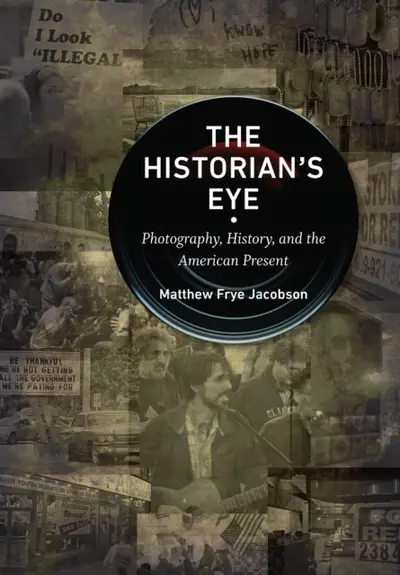
Between 2009 and 2014, as the nation contemplatedthe historic election of Barack Obama andendured the effects of the Great Recession, Matthew Frye Jacobson set out with a camera to explore and document what was discernible to the historians eye during this tumultuous period. Having collected several thousand images, Jacobson began to reflect on their raw, informal immediacy alongside the recognition that they comprised an archive of a moment with unquestionable historical significance. This book presents more than 100 images alongside Jacobsons recollections of their moments of creation and his understanding of how they link past, present, and future. Jacobsons documentary work between2009 and 2014 tracked in real time the emergence of what we now know as Trumpism.The images reveal diverse expressions of civic engagement that are emblematic of the aspirations, expectations, promises, and failures of this period in American history. Myriad closed businesses and abandoned storefronts stand as public monuments to widespread distress; omnipresent, expectant Obama iconography articulates a wish for new national narratives; flamboyant street theater and wry signage bespeak a common impulse to talk back to power. Framed by an introductory essay, these images reflect the sober grace of a time that seems perilous, but in which hope has not ceased to hold meaning.
Bibliographic data © Gardners Books Ltd.