PDF · English
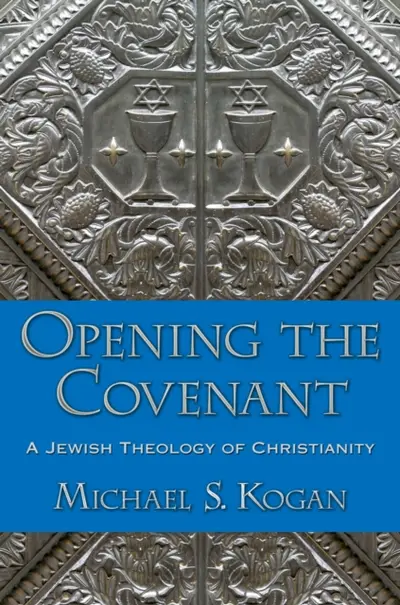
Opening the Covenant
A Jewish Theology of Christianity
Price and availability
$32.99
Available in: Andorra, Austria, Australia, Belgium, Bulgaria, Canada, Switzerland, Cyprus, Czechia, Germany, Denmark, Estonia, Spain, Finland, France, United Kingdom, Guernsey, Greece, Croatia, Hungary, Ireland, Isle of Man, Iceland, Italy, Jersey, Japan, Liechtenstein, Lithuania, Luxembourg, Latvia, Monaco, Malta, Netherlands, Norway, Poland, Portugal, Romania, Sweden, Slovenia, Slovakia, San Marino, United States, Vatican City, South Africa
Stores: US, UK, Canada, EU, Australia.
Sign in to buyThe price is re-checked by the server before payment.
For personal use under the eBook licence.
- Format
- DRM
- Not stated by the publisher
- Language
- English
- Publisher
- Oxford University Press
- Published
- 17 December 2007
- ISBN
- 9780198027232
- Subjects
- Comparative religion, Interfaith relations, Christianity, Judaism, Theology, QRAC, QRAF, QRJ, QRM, QRVG
About this book
The Vatican II Council of 1965 signaled a new era in the relationship of the Jewish and Christian faiths. Determined to free the Church of the anti-Jewish polemic which led to such widespread suffering of the innocent, Catholic authorities completely revised their conceptions of Jews and Judaism. Soon, many mainstream Protestant churches also issued a series of official statements that affirm the eternal nature of God's ancient covenant with Israel. An entirely new category of theology emerged as part of the developing Jewish-Christian dialogue, and gradually Jewish theologians began to respond. Opening the Covenant represents a significant advance in Jewish thinking about Christianity. Michael Kogan delves deep into the theologies of the two faiths to locate precise points of difference and convergence. He sees Christianity as the breaking open of the original Covenant to include Gentile peoples. God has brought this about, says Kogan, through the work of Jesus and his interpreters. If Christianity is a divinely inspired movement, then Judaism must reevaluate its truth-claims. This will in no way compromise the truth of Judaism itself but will cause Jews to understand their own faith more fully by locating it in the larger context of God's universal redemptive plan. Kogan calls for each tradition to receive the wisdom of the other as a means of self-understanding. Once each faith is freed to find God's purpose in the other, the way will be open to a liberating pluralism in which Jews and Christians come to see each other as Israelite siblings sharing a universal role as God's witnesses, the builders of God's Kingdom on Earth. Neither faith can do this world-redemptive work alone. Kogan argues that an affirmation of one's own religion can still provide space for the truth of the "e;other,"e; and presents a theory of multiple revelations of truth flowing from the one God of all.
Bibliographic data © Gardners Books Ltd.