PDF · English
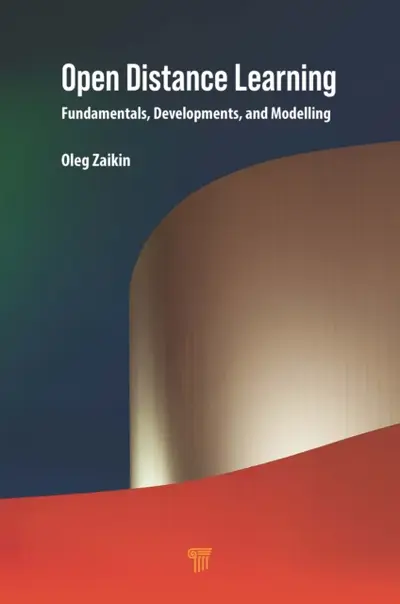
Open Distance Learning
Fundamentals, Developments, and Modelling
Price and availability
$156.99
Available in: Andorra, Austria, Australia, Belgium, Bulgaria, Canada, Switzerland, Cyprus, Czechia, Germany, Denmark, Estonia, Spain, Finland, France, United Kingdom, Guernsey, Greece, Croatia, Hungary, Ireland, Isle of Man, Iceland, Italy, Jersey, Japan, Liechtenstein, Lithuania, Luxembourg, Latvia, Monaco, Malta, Netherlands, Norway, Poland, Portugal, Romania, Sweden, Slovenia, Slovakia, San Marino, United States, Vatican City, South Africa
Stores: US, UK, Canada, EU, Australia.
Sign in to buyThe price is re-checked by the server before payment.
For personal use under the eBook licence.
- Format
- DRM
- Not stated by the publisher
- Language
- English
- Publisher
- Taylor and Francis Group
- Published
- 30 September 2022
- ISBN
- 9781000295948
- Subjects
- Open learning, home learning, distance education, Mathematics, Software Engineering, Open learning, distance education, Digital and Information technology: general topics, Software Engineering, Computer science
About this book
Motivational and social aspects as interactions among teachers and students are essential for a successful educational process in an open distance learning (ODL) environment, and the goal of this book is to develop an interactive model to manage motivation between the participants of the learning process. The book deals with the important and topical problem of e-learning, closely connected with the use of modern information technologies in education. The focus is on developing an information management system for supporting the distance learning process in colleges and universities in the context of steadily expanding information technologies. On the basis of exiting standards (SCORM, etc.) as well as information systems and platforms (e.g., Moodle, etc.), the author proposes a coherent and original concept of modelling three ODL subprocesses: (1) an ontological model (how to represent the structure of didactic materials), (2) a motivation and collaboration model (how to motivate project process participants) and (3) a simulation model (how to realise the learning/project process). The proposed models constitute a theoretical formalization of a new situation in which a teacher and students are obligated to elaborate on didactic material repository content in accordance with the requirements of acquired competencies. A mathematical method based on game theory and simulation is suggested. The kind of educational system represented in the book can be used as a model of open distance learning aimed at active behaviour of students and teachers in not only the development of knowledge but also the acquiring of competencies.
Bibliographic data © Gardners Books Ltd.