EPUB · English
Protecting the Ballot
How First-Wave Democracies Ended Electoral Corruption
Price and availability
$43.99
Available in: Andorra, Austria, Australia, Belgium, Bulgaria, Canada, Switzerland, Cyprus, Czechia, Germany, Denmark, Estonia, Spain, Finland, France, United Kingdom, Guernsey, Greece, Croatia, Hungary, Ireland, Isle of Man, Iceland, Italy, Jersey, Japan, Liechtenstein, Lithuania, Luxembourg, Latvia, Monaco, Malta, Netherlands, Norway, Poland, Portugal, Romania, Sweden, Slovenia, Slovakia, San Marino, United States, Vatican City, South Africa
Stores: US, UK, Canada, EU, Australia.
Sign in to buyThe price is re-checked by the server before payment.
For personal use under the eBook licence.
- Format
- EPUB
- DRM
- Not stated by the publisher
- Language
- English
- Publisher
- Princeton University Press
- Published
- 8 November 2022
- ISBN
- 9780691240046
- Subjects
- Political corruption, Comparative politics, Elections and referenda / suffrage, Political structures / systems: democracy, Corruption in politics, government and society, European history
About this book
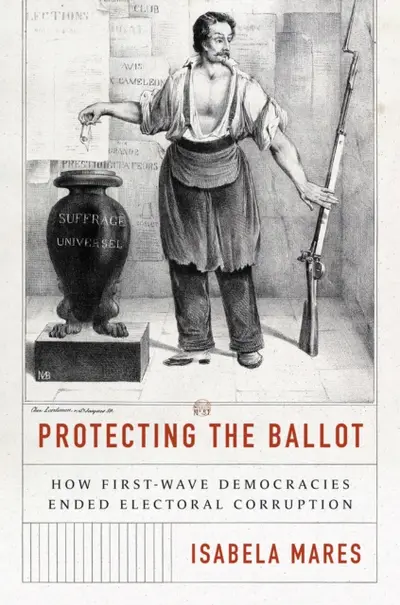
How reforms limiting electoral misconduct completed the process of democratizationBetween 1850 and 1918, many first-wave democracies in Europe adopted electoral reforms that reduced the incidence of electoral malfeasance. Drawing on analysis of parliamentary deliberations and roll-call votes in France, Germany, Belgium, and the United Kingdom, Protecting the Ballot explores how these electoral changes came about.Reforms limiting electoral malfeasance came in a variety of forms. Some reforms imposed harsher punishments for bribing or the politicization of state resources during campaigns. Other changes improved electoral secrecy, providing better protection of voters' autonomy. By mandating the presence of candidate representatives supervising electoral operations, reforms also reduced the incidence of electoral fraud. Isabela Mares documents how elite splits facilitated the formation of parliamentary majorities in support of electoral reforms. The political composition of these majorities varied across countries and across issue area, depending on the distribution of political resources and the economic and electoral costs incurred by politicians with opportunities to engage in malfeasance. Unpacking the electoral determinants of the demand for reforms, Mares offers an alternative to theories of democratization that emphasize economic considerations alone.By studying the successful adoption of reforms limiting electoral irregularities in first-wave democratic transitions, Protecting the Ballot sheds light on the opportunities and obstacles for ending electoral wrongdoing in recent democracies.
Bibliographic data © Gardners Books Ltd.