EPUB · English
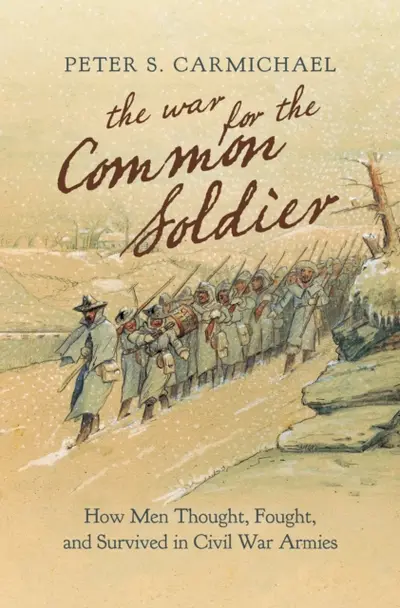
War for the Common Soldier
How Men Thought, Fought, and Survived in Civil War Armies
Price and availability
$155.99
Available in: Andorra, Austria, Australia, Belgium, Bulgaria, Canada, Switzerland, Cyprus, Czechia, Germany, Denmark, Estonia, Spain, Finland, France, United Kingdom, Guernsey, Greece, Croatia, Hungary, Ireland, Isle of Man, Iceland, Italy, Jersey, Japan, Liechtenstein, Lithuania, Luxembourg, Latvia, Monaco, Malta, Netherlands, Norway, Poland, Portugal, Romania, Sweden, Slovenia, Slovakia, San Marino, United States, Vatican City, South Africa
Stores: US, UK, Canada, EU, Australia.
Sign in to buyThe price is re-checked by the server before payment.
For personal use under the eBook licence.
- Format
- EPUB
- DRM
- Not stated by the publisher
- Language
- English
- Publisher
- The University of North Carolina Press
- Published
- 6 December 2018
- ISBN
- 9781469643113
- Subjects
- USA, c 1800 to c 1900, Modern history to 20th century: c 1700 to c 1900, Military history, American Civil War, Battles & campaigns, United States of America, USA, History of the Americas, Military history
About this book
How did Civil War soldiers endure the brutal and unpredictable existence of army life during the conflict? This question is at the heart of Peter S. Carmichaels sweeping new study of men at war. Based on close examination of the letters and records left behind by individual soldiers from both the North and the South, Carmichael explores the totality of the Civil War experience the marching, the fighting, the boredom, the idealism, the exhaustion, the punishments, and the frustrations of being away from families who often faced their own dire circumstances. Carmichael focuses not on what soldiers thought but rather how they thought. In doing so, he reveals how, to the shock of most men, well-established notions of duty or disobedience, morality or immorality, loyalty or disloyalty, and bravery or cowardice were blurred by war.Digging deeply into his soldiers' writing, Carmichael resists the idea that there was a common soldier but looks into their own words to find common threads in soldiers' experiences and ways of understanding what was happening around them. In the end, he argues that a pragmatic philosophy of soldiering emerged, guiding members of the rank and file as they struggled to live with the contradictory elements of their violent and volatile world. Soldiering in the Civil War, as Carmichael argues, was never a state of being but a process of becoming.
Bibliographic data © Gardners Books Ltd.