EPUB · English
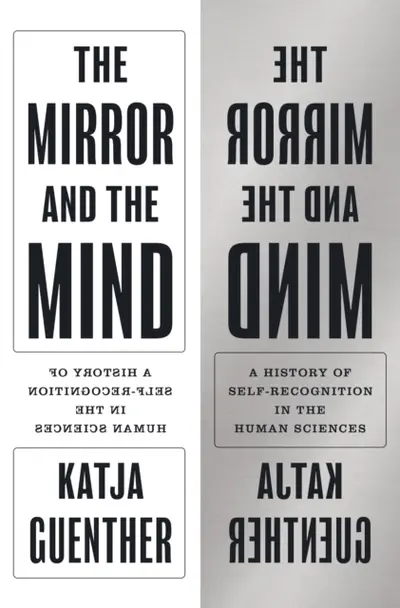
Mirror and the Mind
A History of Self-Recognition in the Human Sciences
Price and availability
$33.99
Available in: Andorra, Austria, Australia, Belgium, Bulgaria, Canada, Switzerland, Cyprus, Czechia, Germany, Denmark, Estonia, Spain, Finland, France, United Kingdom, Guernsey, Greece, Croatia, Hungary, Ireland, Isle of Man, Iceland, Italy, Jersey, Japan, Liechtenstein, Lithuania, Luxembourg, Latvia, Monaco, Malta, Netherlands, Norway, Poland, Portugal, Romania, Sweden, Slovenia, Slovakia, San Marino, United States, Vatican City, South Africa
Stores: US, UK, Canada, EU, Australia.
Sign in to buyThe price is re-checked by the server before payment.
For personal use under the eBook licence.
- Format
- EPUB
- DRM
- Not stated by the publisher
- Language
- English
- Publisher
- Princeton University Press
- Published
- 8 November 2022
- ISBN
- 9780691237268
- Subjects
- Animal behaviour, Cybernetics and systems theory, Cognition and cognitive psychology, Psychology: the self, ego, identity, personality, Scientific equipment, experiments and techniques, History of science, Ethology and animal behaviour
About this book
How the classic mirror test served as a portal for scientists to explore questions of self-awarenessSince the late eighteenth century, scientists have placed subjects-humans, infants, animals, and robots-in front of mirrors in order to look for signs of self-recognition. Mirrors served as the possible means for answering the question: What makes us human? In The Mirror and the Mind, Katja Guenther traces the history of the mirror self-recognition test, exploring how researchers from a range of disciplines-psychoanalysis, psychiatry, developmental and animal psychology, cybernetics, anthropology, and neuroscience-came to read the peculiar behaviors elicited by mirrors. Investigating the ways mirrors could lead to both identification and misidentification, Guenther looks at how such experiments ultimately failed to determine human specificity.The mirror test was thrust into the limelight when Charles Darwin challenged the idea that language sets humans apart. Thereafter the mirror, previously a recurrent if marginal scientific tool, became dominant in attempts to demarcate humans from other animals. But because researchers could not rely on language to determine what their nonspeaking subjects were experiencing, they had to come up with significant innovations, including notation strategies, testing protocols, and the linking of scientific theories across disciplines. From the robotic tortoises of Grey Walter and the mark test of Beulah Amsterdam and Gordon Gallup, to anorexia research and mirror neurons, the mirror test offers a window into the emergence of such fields as biology, psychology, psychiatry, animal studies, cognitive science, and neuroscience.The Mirror and the Mind offers an intriguing history of experiments in self-awareness and the advancements of the human sciences across more than a century.
Bibliographic data © Gardners Books Ltd.