EPUB · English
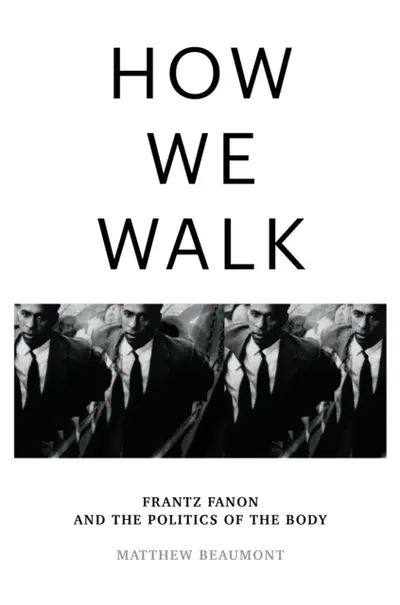
How We Walk
Frantz Fanon and the Politics of the Body
Price and availability
Not sold in this region
Available in: Andorra, Austria, Australia, Belgium, Bulgaria, Switzerland, Cyprus, Czechia, Germany, Denmark, Estonia, Spain, Finland, France, United Kingdom, Guernsey, Greece, Croatia, Hungary, Ireland, Isle of Man, Iceland, Italy, Jersey, Japan, Liechtenstein, Lithuania, Luxembourg, Latvia, Monaco, Malta, Netherlands, Norway, Poland, Portugal, Romania, Sweden, Slovenia, Slovakia, San Marino, Vatican City, South Africa
Stores: UK, EU, Australia. Not available in the United States store.
This title cannot be bought in this store yet: its supplier terms, territorial rights or price are still being confirmed.
For personal use under the eBook licence.
- Format
- EPUB
- DRM
- Not stated by the publisher
- Language
- English
- Publisher
- Verso
- Published
- 5 March 2024
- ISBN
- 9781804290095
- Subjects
- Philosophy, Western philosophy, from c 1900 -, History of ideas, Ethnic minorities & multicultural studies, Walking, hiking, trekking, Ethnic groups and multicultural studies, Western philosophy from c 1800, Walking, hiking, trekking
About this book
You can tell a lot about people by how they walk. Matthew Beaumont argues that our standing, walking body holds the social traumas of history and its racialized inequalities. Our posture and gait reflect our social and political experiences as we navigate the city under capitalism. Through a series of dialogues with thinkers and walkers, his book explores the relationship between freedom and the human bodyHow We Walk foregrounds the work of Frantz Fanon, psychiatrist and leading thinker of liberation, who was one of the first people to think about the politics of 'walking while black'. It also introduces us to the renegade psychoanalyst Wilhelm Reich, who wrote that one could discern the truth about a person through their posture and gait. For Marxist philosopher Ernst Bloch, the ability to walk upright and with ease is a sign of personal and social freedom.Through these excursions, Beaumont reimagines the canonical literature on walking and presents a new interpretation of the impact of class and race on our physical and political mobility, raising important questions about the politics of the body.
Bibliographic data © Gardners Books Ltd.