PDF · English
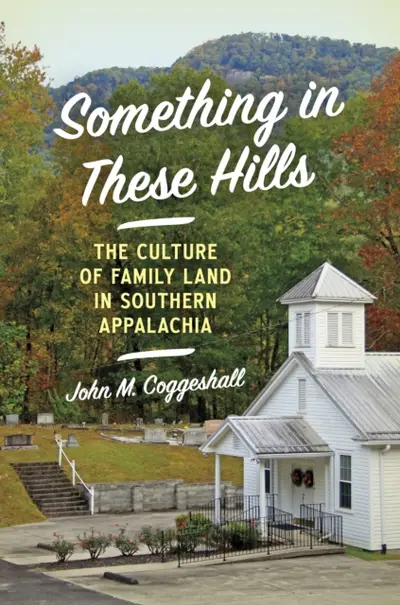
Something in These Hills
The Culture of Family Land in Southern Appalachia
Price and availability
$24.99
Available in: Andorra, Austria, Australia, Belgium, Bulgaria, Canada, Switzerland, Cyprus, Czechia, Germany, Denmark, Estonia, Spain, Finland, France, United Kingdom, Guernsey, Greece, Croatia, Hungary, Ireland, Isle of Man, Iceland, Italy, Jersey, Japan, Liechtenstein, Lithuania, Luxembourg, Latvia, Monaco, Malta, Netherlands, Norway, Poland, Portugal, Romania, Sweden, Slovenia, Slovakia, San Marino, United States, Vatican City, South Africa
Stores: US, UK, Canada, EU, Australia.
Sign in to buyThe price is re-checked by the server before payment.
For personal use under the eBook licence.
- Format
- DRM
- Not stated by the publisher
- Language
- English
- Publisher
- The University of North Carolina Press
- Published
- 7 September 2022
- ISBN
- 9781469670263
- Subjects
- USA, Cultural studies, Social issues & processes, Ethnic studies, United States of America, USA, Regional / International studies, Ethnic studies / Ethnicity
About this book
What is the something in these hills that ties mountain families to family land in the southern Appalachians? This ethnographic examination challenges contemporary theory and explores two interrelated themes: the duality of the southern Appalachians as both a menacing and majestic landscape and the emotional relationship to family land characteristic of long-term residents of these mountains. To most outsiders, the area conjures images of a beautiful yet dangerous place, typified by the movie Deliverance. To long-term residents, these mountains have a fundamental emotional hold so powerful that many mourn the sale or loss of family land as if it were a deceased relative. How can the same geographical space be both? Using a carefully crafted cultural lens, John M. Coggeshall explains how family land anthropomorphizes, metaphorically becoming another member of kin groups. He establishes that this emotional sense of place existed prior to recent land losses, contrary to some contemporary scholars. Utilizing the voices and perspectives of long-term residents, the book provides readers with a more fundamental understanding of the something in these hills that holds people in place.
Bibliographic data © Gardners Books Ltd.