PDF · English
Commemorative Theatricality
Embodied Dynamics of Memory and Memorial
Price and availability
$59.99
Available in: Andorra, Austria, Australia, Belgium, Bulgaria, Canada, Switzerland, Cyprus, Czechia, Germany, Denmark, Estonia, Spain, Finland, France, United Kingdom, Guernsey, Greece, Croatia, Hungary, Ireland, Isle of Man, Iceland, Italy, Jersey, Japan, Liechtenstein, Lithuania, Luxembourg, Latvia, Monaco, Malta, Netherlands, Norway, Poland, Portugal, Romania, Sweden, Slovenia, Slovakia, San Marino, United States, Vatican City, South Africa
Stores: US, UK, Canada, EU, Australia.
Sign in to buyThe price is re-checked by the server before payment.
For personal use under the eBook licence.
- Format
- DRM
- Not stated by the publisher
- Language
- English
- Publisher
- Taylor & Francis
- Published
- 6 October 2026
- ISBN
- 9781040993743
- Subjects
- Germany, Denmark, Hungary, Poland, Lithuania, Performance art, Theatre studies, Museology & heritage studies, Social & cultural history, Berlin, Copenhagen, Vilnius, Budapest, Krakow, Theatre studies, Museology and heritage studies, Social and cultural history
About this book
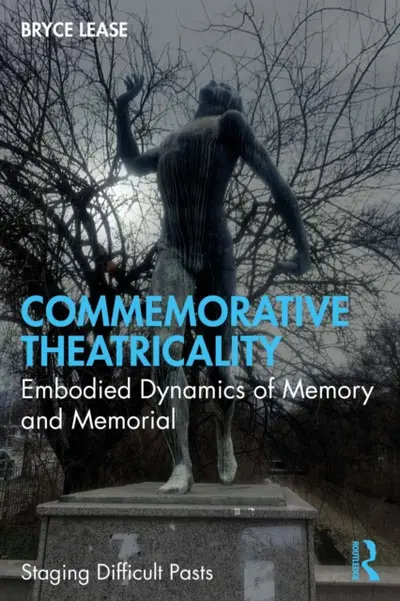
Commemorative Theatricality: Embodied Dynamics of Memory and Memorial rethinks remembrance as an embodied, relational, and contested practice. Moving across museums, memorials, statue parks, urban spaces, and performance works in Central and Eastern Europe, this book examines how memory is not simply preserved or displayed but enacted through bodies, sites, objects, affects, and movement.Challenging assumptions that theatricality is merely spectacular, artificial, or ethically suspect, this book proposes commemorative theatricality as a critical framework for analysing how audiences are positioned as witnesses, participants, and implicated historical subjects. Case studies include POLIN Museum of the History of Polish Jews, Budapest's House of Terror, Lithuania's Grutas Park, and participatory performance projects in Berlin, Copenhagen, Krakow, and Vilnius.Bridging theatre and performance studies, memory studies, museum studies, heritage research, and cultural theory, this book shows how commemoration can both reinforce ideological narratives and open spaces for shared history, critical reflection, and collective grief. It invites readers to understand remembrance not as inert tribute but as a living encounter with the past that shapes responsibility in the present.
Bibliographic data © Gardners Books Ltd.