PDF · English
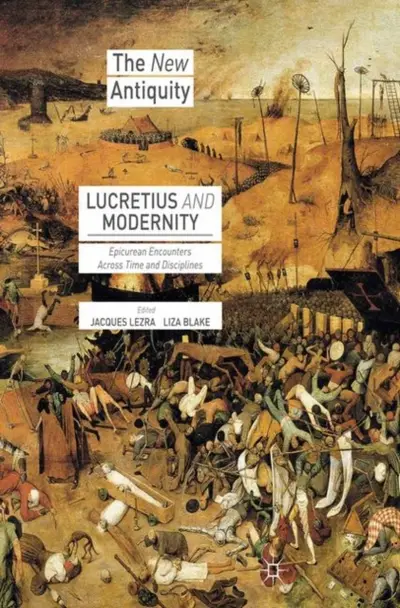
Lucretius and Modernity
Epicurean Encounters Across Time and Disciplines
Price and availability
$33.99
Available in: Andorra, Austria, Australia, Belgium, Bulgaria, Canada, Switzerland, Cyprus, Czechia, Germany, Denmark, Estonia, Spain, Finland, France, United Kingdom, Guernsey, Greece, Croatia, Hungary, Ireland, Isle of Man, Iceland, Italy, Jersey, Japan, Liechtenstein, Lithuania, Luxembourg, Latvia, Monaco, Malta, Netherlands, Norway, Poland, Portugal, Romania, Sweden, Slovenia, Slovakia, San Marino, United States, Vatican City, South Africa
Stores: US, UK, Canada, EU, Australia.
Sign in to buyThe price is re-checked by the server before payment.
For personal use under the eBook licence.
- Format
- DRM
- Not stated by the publisher
- Language
- English
- Publisher
- Palgrave Macmillan US
- Published
- 8 April 2016
- ISBN
- 9781137566577
- Subjects
- Europe, Latin, Literary theory, Literary studies: general, Literary studies: classical, early & medieval, Literary studies: poetry & poets, Western philosophy: Ancient, to c 500, Society & culture: general, Europe, Literature: history and criticism, Literary theory, Literary studies: ancient, classical and medieval, Literary studies: poetry and poets, Cultural studies, Ancient history
About this book
Lucretius's long shadow falls across the disciplines of literary history and criticism, philosophy, religious studies, classics, political philosophy, and the history of science. The best recent example is Stephen Greenblatt's popular account of the Roman poet's De Rerum Natura (On the Nature of Things) rediscovery by Poggio Bracciolini, and of its reception in early modernity, winner of both a Pulitzer Prize and National Book Award. Despite the poem's newfound influence and visibility, very little cross-disciplinary conversation has taken place. This edited collection brings together essays by distinguished scholars to examine the relationship between Lucretius and modernity. Key questions weave this book's ideas and arguments together: What is the relation between literary form and philosophical argument? How does the text of De rerum natura allow itself to be used, at different historical moments and to different ends? What counts as reason for Lucretius? Together, these essays present a nuanced, skeptical, passionate, historically sensitive, and complicated account of what is at stake when we claim Lucretius for modernity.
Bibliographic data © Gardners Books Ltd.