PDF · English
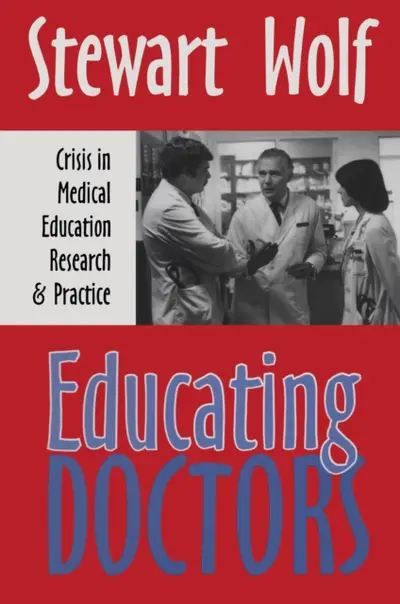
Educating Doctors
Crisis in Medical Education, Research and Practice
Price and availability
$45.99
Available in: Andorra, Austria, Australia, Belgium, Bulgaria, Canada, Switzerland, Cyprus, Czechia, Germany, Denmark, Estonia, Spain, Finland, France, United Kingdom, Guernsey, Greece, Croatia, Hungary, Ireland, Isle of Man, Iceland, Italy, Jersey, Japan, Liechtenstein, Lithuania, Luxembourg, Latvia, Monaco, Malta, Netherlands, Norway, Poland, Portugal, Romania, Sweden, Slovenia, Slovakia, San Marino, United States, Vatican City, South Africa
Stores: US, UK, Canada, EU, Australia.
Sign in to buyThe price is re-checked by the server before payment.
For personal use under the eBook licence.
- Format
- DRM
- Not stated by the publisher
- Language
- English
- Publisher
- Taylor & Francis
- Published
- 18 January 2018
- ISBN
- 9781351291675
- Subjects
- Education, Teaching of a specific subject, Medicine: general issues, Medical profession, Health systems & services, Medical sociology, United States of America, USA, Medical profession, Medical research, Health systems and services, Medical sociology
About this book
At a time when medical care for the people of the United States is undergoing wrenching change due mainly to vast and costly technological progress, doctors have had to cede much of their initiative and responsibility to third parties. Medicine has become a commercial enterprise. Patients must affiliate themselves with a managed health care organization in order to have access to their doctors. In the hurly-burly of today's techno-medicine, many physicians are too busy to spend time in dialogue with their patients. As a consequence, social and emotional circumstances that have been thoroughly documented to affect physiology and susceptibility to disease are overlooked.Stewart Wolf here critiques the medical establishment and the way those concerned with its various responsibilities discharge them. He puts medicine's responsibilities to society into historical perspective, relating it to social changes. He begins with the ways medical candidates are selected. He continues with commentary on currently designed teaching and learning, the qualities required in a physician and in a medical scientist, and the nature and challenges of disease and what can be done about them. Finally, Wolf provides a useful way of thinking about human biology, to better understand why people become sick or well and what people have to contend with to stay well. Throughout he emphasizes the role of the brain in controlling behavior of all sorts, general and visceral.Wolf emphasizes the regulatory power of the nervous system as it perceives and evaluates life experiences and influences learning, behavior, and susceptibility to disease. Wolf'sgoal is not to supply a recipe for the achievement of better health, but to encourage a better understanding of ourselves and the paths toward health. Educating Doctors reexamines the responsibilities, goals, and activities of the medical establishment. As such it is a must read for policymakers, sociologists, and professionals working in the medical field.
Bibliographic data © Gardners Books Ltd.