EPUB · English
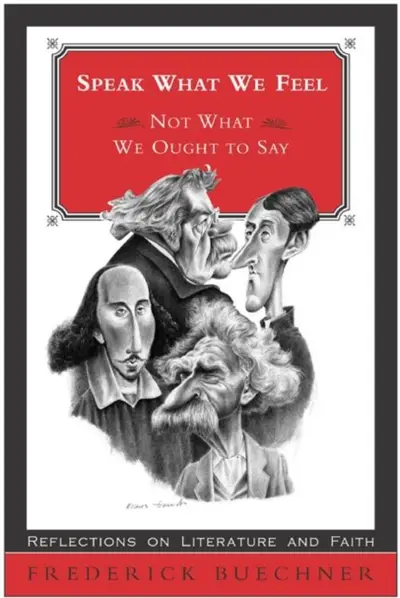
Speak What We Feel
Not What We Ought to Say
Price and availability
Price unavailable
Available in: Andorra, Austria, Australia, Belgium, Bulgaria, Canada, Switzerland, Cyprus, Czechia, Germany, Denmark, Estonia, Spain, Finland, France, United Kingdom, Guernsey, Greece, Croatia, Hungary, Ireland, Isle of Man, Iceland, Italy, Jersey, Japan, Liechtenstein, Lithuania, Luxembourg, Latvia, Monaco, Malta, Netherlands, Norway, Poland, Portugal, Romania, Sweden, Slovenia, Slovakia, San Marino, United States, Vatican City, South Africa
Stores: US, UK, Canada, EU, Australia.
This title cannot be bought in this store yet: its supplier terms, territorial rights or price are still being confirmed.
For personal use under the eBook licence.
- Format
- EPUB
- DRM
- Not stated by the publisher
- Language
- English
- Publisher
- Zondervan
- Published
- 13 October 2009
- ISBN
- 9780061752674
- Subjects
- Literary studies: poetry & poets, Religion & beliefs, Philosophy of religion, Christianity, Theology, Prayer, Spirituality & religious experience, Religious life & practice, Assertiveness, motivation & self-esteem, Mind, Body, Spirit: thought & practice, Literary studies: poetry and poets, QR, QRAB, QRM, QRVG, QRVJ2, QRVK, QRVP, Assertiveness, motivation, self-esteem and positive mental attitude, Mind, body, spirit: thought and practice
About this book
In this compelling book, the great contemporary spiritual writer and novelist Frederick Buechner plumbs the mysteries and truths behind the literature that speaks to him most powerfully. Buechner presents the four authors who have been his greatest influences, focusing on the question that has emerged at the center of his life-how to face mortality, failure, and tragedy. Through sensitive biographical exploration and close reading of Gerard Manley Hopkins's sublime later sonnets, Mark Twain's Huckleberry Finn, G. K. Chesterton's The Man Who Was Thursday, and William Shakespeare's most powerful play, King Lear, Buechner invites readers to discover the deeper joy and purpose of reading. He shows how these writers -- by putting their passion and pain into their work -- have enabled him to bear the weight of his own grief and sadness by "e;speaking out from under the burden of theirs."e; Buechner's ruminations on their writings leads to the revelation that God accepts us for doing the best we can, even if our lives are in some ways a failure; even if we have lived a life haunted by tragedy, as Buechner's has been haunted by his father's suicide. Buechner connects his readings to the fabric of his life and the lives of his subjects as he explores the ways in which these writers have shaped him and enhanced his faith. Buechner's insights into the power and imagination of their work resonate with his love for all that literature has given him throughout his life -- a passion he generously shares with us in Speak What We Feel.
Bibliographic data © Gardners Books Ltd.