EPUB · English
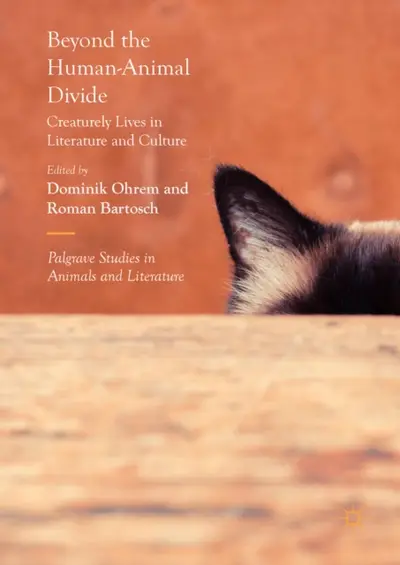
Beyond the Human-Animal Divide
Creaturely Lives in Literature and Culture
Price and availability
$148.99
Available in: Andorra, Austria, Australia, Belgium, Bulgaria, Canada, Switzerland, Cyprus, Czechia, Germany, Denmark, Estonia, Spain, Finland, France, United Kingdom, Guernsey, Greece, Croatia, Hungary, Ireland, Isle of Man, Iceland, Italy, Jersey, Japan, Liechtenstein, Lithuania, Luxembourg, Latvia, Monaco, Malta, Netherlands, Norway, Poland, Portugal, Romania, Sweden, Slovenia, Slovakia, San Marino, United States, Vatican City, South Africa
Stores: US, UK, Canada, EU, Australia.
Sign in to buyThe price is re-checked by the server before payment.
For personal use under the eBook licence.
- Format
- EPUB
- DRM
- Not stated by the publisher
- Language
- English
- Publisher
- Palgrave Macmillan US
- Published
- 21 November 2017
- ISBN
- 9781349934379
- Subjects
- Europe, Literature: history & criticism, Literary theory, Literary studies: from c 1900 -, Social & political philosophy, Europe, Literature: history and criticism, Literary theory, Literary studies: c 1900 to c 2000, Comparative literature, Social and political philosophy
About this book
This volume explores the potential of the concept of the creaturely for thinking and writing beyond the idea of a clear-cut human-animal divide, presenting innovative perspectives and narratives for an age which increasingly confronts us with the profound ecological, ethical and political challenges of a multispecies world. The text explores written work such as Samuel Beckett's Worstward Ho and Michel Foucault's The Order of Things, video media such as the film "e;Creature Comforts"e; and the video game Into the Dead, and photography. With chapters written by an international group of philosophers, literary and cultural studies scholars, historians and others, the volume brings together established experts and forward-thinking early career scholars to provide an interdisciplinary engagement with ways of thinking and writing the creaturely to establish a postanthropocentric sense of human-animal relationality.
Bibliographic data © Gardners Books Ltd.