PDF · English
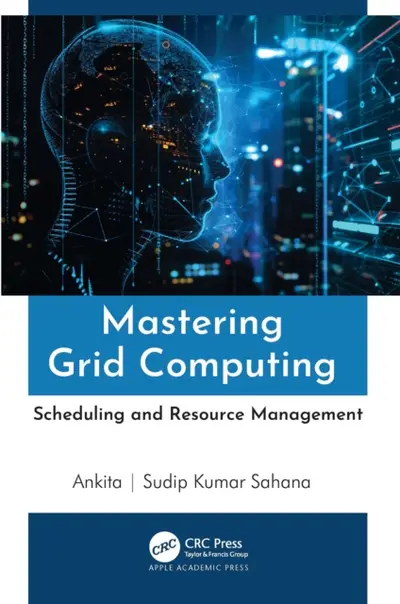
Mastering Grid Computing
Scheduling and Resource Management
Price and availability
$162.99
Available in: Andorra, Austria, Australia, Belgium, Bulgaria, Canada, Switzerland, Cyprus, Czechia, Germany, Denmark, Estonia, Spain, Finland, France, United Kingdom, Guernsey, Greece, Croatia, Hungary, Ireland, Isle of Man, Iceland, Italy, Jersey, Japan, Liechtenstein, Lithuania, Luxembourg, Latvia, Monaco, Malta, Netherlands, Norway, Poland, Portugal, Romania, Sweden, Slovenia, Slovakia, San Marino, United States, Vatican City, South Africa
Stores: US, UK, Canada, EU, Australia.
Sign in to buyThe price is re-checked by the server before payment.
For personal use under the eBook licence.
- Format
- DRM
- Not stated by the publisher
- Language
- English
- Publisher
- Taylor and Francis Group
- Published
- 9 May 2025
- ISBN
- 9781040316641
- Subjects
- Electrical engineering, Communications engineering / telecommunications, Algorithms & data structures, Computer networking & communications, Grid computing, Computer science, Computer architecture & logic design, Parallel processing, Electrical engineering, Communications engineering / telecommunications, Algorithms and data structures, Computer networking and communications, Computer architecture and logic design
About this book
Grid computing, a computing infrastructure that combines computer resources spread over different geographical locations to achieve a common goal, is seen as an efficient solution to solve complex real-world computer problems in a shorter time. Grid computing makes it easier to collaborate with other organizations, makes better use of existing hardware, and reduces transmission congestion, leading to more efficient electricity markets, improved power quality, and a reduced environmental impact.Highlighting the salient features of grid computing, this new book begins with the basic definition of grid and its architecture and also discusses advances to the complex hybridized model of grid computing, grid scheduling, and grid resource management. The chapters address different problems causing grid bottlenecks, the formulation of solution strategies, implementation of grid scheduling, along with case studies of grid computing. It introduces several scheduling algorithms and evaluates the efficiency of these algorithms using comparative analysis while also discussing grid simulators. The book will be a valuable guide for new and experienced researchers and will advance their understanding of the concept of grid computing in a broader perspective. Starting from the basic definition of grid and its architecture to the complex hybridized model of scheduling, this book is a comprehensive resource on grid computing, grid scheduling, and grid resource management.
Bibliographic data © Gardners Books Ltd.