PDF · English
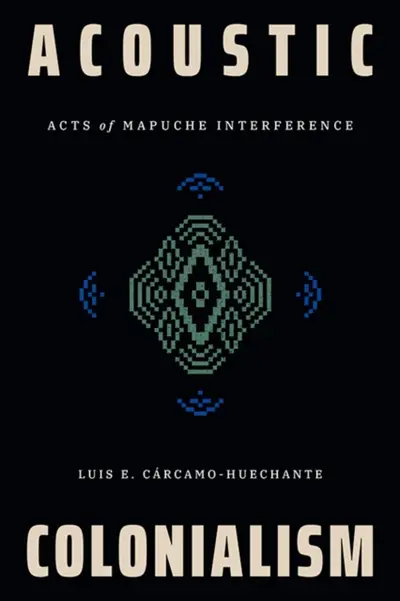
Acoustic Colonialism
Acts of Mapuche Interference
Price and availability
$43.99
Available in: Andorra, Austria, Australia, Belgium, Bulgaria, Canada, Switzerland, Cyprus, Czechia, Germany, Denmark, Estonia, Spain, Finland, France, United Kingdom, Guernsey, Greece, Croatia, Hungary, Ireland, Isle of Man, Iceland, Italy, Jersey, Japan, Liechtenstein, Lithuania, Luxembourg, Latvia, Monaco, Malta, Netherlands, Norway, Poland, Portugal, Romania, Sweden, Slovenia, Slovakia, San Marino, United States, Vatican City, South Africa
Stores: US, UK, Canada, EU, Australia.
Sign in to buyThe price is re-checked by the server before payment.
For personal use under the eBook licence.
- Format
- DRM
- Not stated by the publisher
- Language
- English
- Publisher
- Duke University Press
- Published
- 12 September 2025
- ISBN
- 9781478061533
- Subjects
- Caribbean islands, Latin America, Indigenous peoples, Social & cultural anthropology, ethnography, Acoustic & sound engineering, Caribbean islands, Latin America – Mexico, Central America, South America, JBSL11, Social and cultural anthropology, Acoustic and sound engineering
About this book
In Acoustic Colonialism, Luis E. Carcamo-Huechante examines the role of sound in Chilean and Mapuche cultural production over the last two centuries. Carcamo-Huechante theorizes sound as a territory of racial, patriarchal, and colonial hegemony as well as of Mapuche struggle, agency, and response to what he calls "e;acoustic colonialism."e; From the mid-nineteenth century to the present, Chilean literature, radio, and other media have exerted a historic role in disseminating distorted visual and sonic representations of the Mapuche. The enduring effects of what Carcamo-Huechante defines as the colonial ear-the entry point for these misrepresentations-reflect the logic of the Chilean settler nation-state. In response to these aural and sonorous figurations, contemporary Mapuche writers, artists, and activists have produced their own literary, radiophonic, vocal, and musical expressions. The voices, sounds, and discourses of these Mapuche productions contest and disrupt the acoustic colonialism that has dominated the soundscape of the territory designated in present-day cartography as central and southern Chile.
Bibliographic data © Gardners Books Ltd.