PDF · English
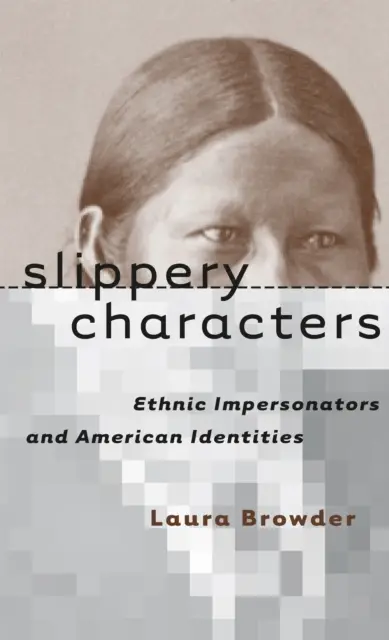
Slippery Characters
Ethnic Impersonators and American Identities
Price and availability
$31.99
Available in: Andorra, Austria, Australia, Belgium, Bulgaria, Canada, Switzerland, Cyprus, Czechia, Germany, Denmark, Estonia, Spain, Finland, France, United Kingdom, Guernsey, Greece, Croatia, Hungary, Ireland, Isle of Man, Iceland, Italy, Jersey, Japan, Liechtenstein, Lithuania, Luxembourg, Latvia, Monaco, Malta, Netherlands, Norway, Poland, Portugal, Romania, Sweden, Slovenia, Slovakia, San Marino, United States, Vatican City, South Africa
Stores: US, UK, Canada, EU, Australia.
Sign in to buyThe price is re-checked by the server before payment.
For personal use under the eBook licence.
- Format
- DRM
- Not stated by the publisher
- Language
- English
- Publisher
- The University of North Carolina Press
- Published
- 20 June 2003
- ISBN
- 9780807860601
- Subjects
- USA, Literary studies: general, Cultural studies, Ethnic studies, Ethnic minorities & multicultural studies, United States of America, USA, Literature: history and criticism, Ethnic studies / Ethnicity
About this book
In the 1920s, black janitor Sylvester Long reinvented himself as Chief Buffalo Child Long Lance, and Elizabeth Stern, the native-born daughter of a German Lutheran and a Welsh Baptist, authored the immigrants narrative I Am a Woman and a Jew; in the 1990s, Asa Carter, George Wallaces former speechwriter, produced the fake Cherokee autobiography, The Education of Little Tree. While striking, these examples of what Laura Browder calls ethnic impersonator autobiographies are by no means singular. Over the past 150 years, a number of American authors have left behind unwanted identities by writing themselves into new ethnicities.Significantly, notes Browder, these ersatz autobiographies have tended to appear at flashpoints in American history: in the decades before the Civil War, when immigration laws and laws regarding Native Americans were changing in the 1920s, and during the civil rights era, for example. Examining the creation and reception of such works from the 1830s through the 1990s against a background ranging from the abolition movement and Wild West shows to more recent controversies surrounding blackface performance and jazz music Browder uncovers their surprising influence in shaping American notions of identity.
Bibliographic data © Gardners Books Ltd.