PDF · English
Truth, Denial and Transition
Northern Ireland and the Contested Past
Price and availability
$68.99
Available in: Andorra, Austria, Australia, Belgium, Bulgaria, Canada, Switzerland, Cyprus, Czechia, Germany, Denmark, Estonia, Spain, Finland, France, United Kingdom, Guernsey, Greece, Croatia, Hungary, Ireland, Isle of Man, Iceland, Italy, Jersey, Japan, Liechtenstein, Lithuania, Luxembourg, Latvia, Monaco, Malta, Netherlands, Norway, Poland, Portugal, Romania, Sweden, Slovenia, Slovakia, San Marino, United States, Vatican City, South Africa
Stores: US, UK, Canada, EU, Australia.
Sign in to buyThe price is re-checked by the server before payment.
For personal use under the eBook licence.
- Format
- DRM
- Not stated by the publisher
- Language
- English
- Publisher
- Taylor & Francis
- Published
- 8 October 2018
- ISBN
- 9781317755517
- Subjects
- Peace studies & conflict resolution, Crime & criminology, International relations, Civil rights & citizenship, Terrorism, armed struggle, Jurisprudence & general issues, Private international law & conflict of laws, Civil procedure, litigation & dispute resolution, Civil remedies, Criminal justice law, Offences against the government, Terrorism law, Northern Ireland, Political activism / Political engagement, Public international law: human rights
About this book
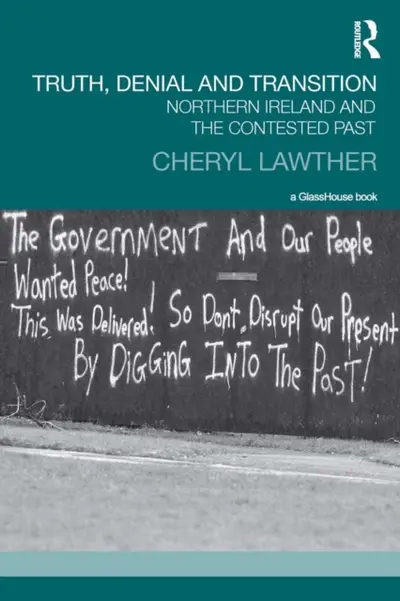
Truth, Denial and Transition: Northern Ireland and the Contested Past makes a unique and timely contribution to the transitional justice field. In contrast to the focus on truth and those societies where truth recovery has been central to dealing with the aftermath of human rights violations, comparatively little scholarly attention has been paid to those jurisdictions whose transition from violent conflict has been marked by the absence or rejection of a formal truth process. This book draws upon the case study of Northern Ireland, where, despite a lengthy debate, the question of establishing a formal truth recovery process remains hotly contested. The strongest and most vocal opposition has been from unionist political elites, loyalist ex-combatants and members of the security forces. Based on empirical research, their opposition is unpicked and interrogated at length throughout this book. Critically exploring notions of national imagination and blamelessness, the politics of victimhood and the tension between traditions of sacrifice and the fear of betrayal, this book is the first substantive effort to concentrate on the opponents of truth recovery rather than its advocates.This book will interest those studying truth processes and transitional justice in the fields of Law, Politics, and Criminology.
Bibliographic data © Gardners Books Ltd.