PDF · English
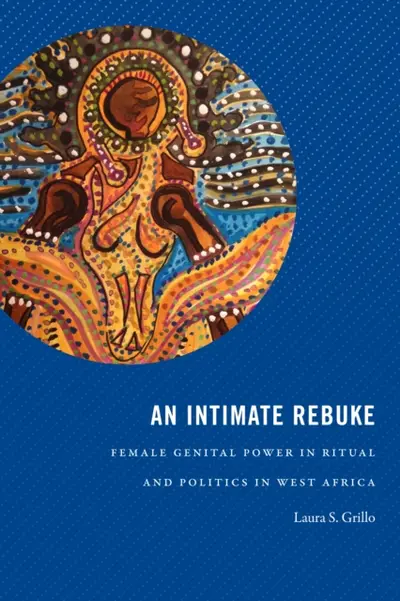
Intimate Rebuke
Female Genital Power in Ritual and Politics in West Africa
Price and availability
$4.99
Available in: Andorra, Austria, Australia, Belgium, Bulgaria, Canada, Switzerland, Cyprus, Czechia, Germany, Denmark, Estonia, Spain, Finland, France, United Kingdom, Guernsey, Greece, Croatia, Hungary, Ireland, Isle of Man, Iceland, Italy, Jersey, Japan, Liechtenstein, Lithuania, Luxembourg, Latvia, Monaco, Malta, Netherlands, Norway, Poland, Portugal, Romania, Sweden, Slovenia, Slovakia, San Marino, United States, Vatican City, South Africa
Stores: US, UK, Canada, EU, Australia.
Sign in to buyThe price is re-checked by the server before payment.
For personal use under the eBook licence.
- Format
- DRM
- Not stated by the publisher
- Language
- English
- Publisher
- Duke University Press
- Published
- 10 January 2019
- Pages
- 328
- ISBN
- 9781478002635
- Subjects
- Ivory Coast, African history, Tribal religions, Gender studies: women, Social & cultural anthropology, ethnography, JBSF1, Social and cultural anthropology, NHH, QRRN
About this book
Throughout West African societies, at times of social crises, postmenopausal women-the Mothers-make a ritual appeal to their innate moral authority. The seat of this power is the female genitalia. Wielding branches or pestles, they strip naked and slap their genitals and bare breasts to curse and expel the forces of evil. In An Intimate Rebuke Laura S. Grillo draws on fieldwork in Cote d'Ivoire that spans three decades to illustrate how these rituals of Female Genital Power (FGP) constitute religious and political responses to abuses of power. When deployed in secret, FGP operates as spiritual warfare against witchcraft; in public, it serves as a political activism. During Cote d'Ivoire's civil wars FGP challenged the immoral forces of both rebels and the state. Grillo shows how the ritual potency of the Mothers' nudity and the conjuration of their sex embodies a moral power that has been foundational to West African civilization. Highlighting the remarkable continuity of the practice across centuries while foregrounding the timeliness of FGP in contemporary political resistance, Grillo shifts perspectives on West African history, ethnography, comparative religious studies, and postcolonial studies.
Bibliographic data © Gardners Books Ltd.