PDF · English
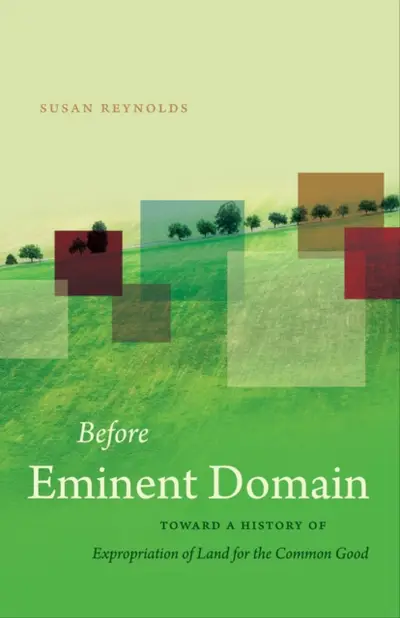
Before Eminent Domain
Toward a History of Expropriation of Land for the Common Good
Price and availability
$108.99
Available in: Andorra, Austria, Australia, Belgium, Bulgaria, Canada, Switzerland, Cyprus, Czechia, Germany, Denmark, Estonia, Spain, Finland, France, United Kingdom, Guernsey, Greece, Croatia, Hungary, Ireland, Isle of Man, Iceland, Italy, Jersey, Japan, Liechtenstein, Lithuania, Luxembourg, Latvia, Monaco, Malta, Netherlands, Norway, Poland, Portugal, Romania, Sweden, Slovenia, Slovakia, San Marino, United States, Vatican City, South Africa
Stores: US, UK, Canada, EU, Australia.
Sign in to buyThe price is re-checked by the server before payment.
For personal use under the eBook licence.
- Format
- DRM
- Not stated by the publisher
- Language
- English
- Publisher
- The University of North Carolina Press
- Published
- 1 March 2010
- ISBN
- 9781469604282
- Subjects
- USA, European history, History of the Americas, Legal history, Europe, United States of America, USA, Legal history, European history, History of the Americas
About this book
In this concise history of expropriation of land for the common good in Europe and North America from medieval times to 1800, Susan Reynolds contextualizes the history of an important legal doctrine regarding the relationship between government and the institution of private property.Before Eminent Domain concentrates on western Europe and the English colonies in America. As Reynolds argues, expropriation was a common legal practice in many societies in which individuals had rights to land. It was generally accepted that land could be taken from them, with compensation, when the community, however defined, needed it. She cites examples of the practice since the early Middle Ages in England, France, Germany, Italy, and Spain, and from the seventeenth century in America.Reynolds concludes with a discussion of past and present ideas and assumptions about community, individual rights, and individual property that underlie the practice of expropriation but have been largely ignored by historians of both political and legal thought.
Bibliographic data © Gardners Books Ltd.