EPUB · English
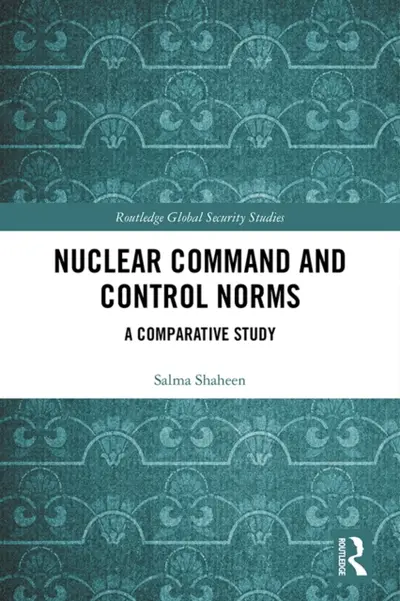
Nuclear Command and Control Norms
A Comparative Study
Price and availability
$66.99
Available in: Andorra, Austria, Australia, Belgium, Bulgaria, Canada, Switzerland, Cyprus, Czechia, Germany, Denmark, Estonia, Spain, Finland, France, United Kingdom, Guernsey, Greece, Croatia, Hungary, Ireland, Isle of Man, Iceland, Italy, Jersey, Japan, Liechtenstein, Lithuania, Luxembourg, Latvia, Monaco, Malta, Netherlands, Norway, Poland, Portugal, Romania, Sweden, Slovenia, Slovakia, San Marino, United States, Vatican City, South Africa
Stores: US, UK, Canada, EU, Australia.
Sign in to buyThe price is re-checked by the server before payment.
For personal use under the eBook licence.
- Format
- EPUB
- DRM
- Not stated by the publisher
- Language
- English
- Publisher
- Taylor & Francis
- Published
- 28 September 2018
- ISBN
- 9780429790799
- Subjects
- Peace studies & conflict resolution, Military history, Politics & government, International relations, Diplomacy, Political control & freedoms, United Kingdom, Great Britain, India, Pakistan, China, Arms negotiation and control, Nuclear weapons
About this book
This book offers a new analytical framework for studying nuclear command and control (C2), based on a comparative study of four nuclear weapons states (NWS).The subject of nuclear operations management has long been shrouded in secrecy, and whilst the importance of nuclear C2 cannot be disputed, there are few academic studies into how and why states develop these systems. This volume includes a comparative study of the development of nuclear C2 by four different NWS (Britain, China, India, and Pakistan) and demonstrates that, despite several differences, there is a central set of factors that remain constant. The analytical framework used in this study identifies key factors that can potentially shape the evolution and stability of nuclear C2. These factors include geostrategic (threat) environment, international norms, leadership, and control of nuclear operations (civil-military control). The book also analyses the interaction among different stakeholders within the nuclear C2 enterprise. It recognises that politicians, the military and scientists all have key but different roles to play, and the way these stakeholders have learned to co-exist with each other is explored. This volume offers a set of dynamics that could form a global norm for nuclear C2, serving as a standard for new entrants into the nuclear club.This book will be of much interest to students of nuclear proliferation, global governance, and International Relations in general.
Bibliographic data © Gardners Books Ltd.