PDF · English
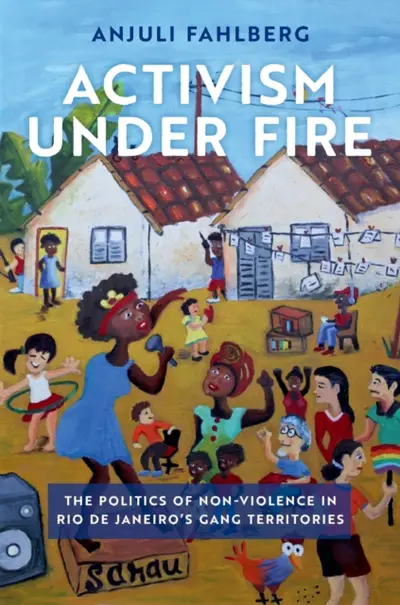
Activism under Fire
The Politics of Non-Violence in Rio de Janeiro's Gang Territories
Price and availability
$20.99
Available in: Andorra, Austria, Australia, Belgium, Bulgaria, Canada, Switzerland, Cyprus, Czechia, Germany, Denmark, Estonia, Spain, Finland, France, United Kingdom, Guernsey, Greece, Croatia, Hungary, Ireland, Isle of Man, Iceland, Italy, Jersey, Japan, Liechtenstein, Lithuania, Luxembourg, Latvia, Monaco, Malta, Netherlands, Norway, Poland, Portugal, Romania, Sweden, Slovenia, Slovakia, San Marino, United States, Vatican City, South Africa
Stores: US, UK, Canada, EU, Australia.
Sign in to buyThe price is re-checked by the server before payment.
For personal use under the eBook licence.
- Format
- DRM
- Not stated by the publisher
- Language
- English
- Publisher
- Oxford University Press
- Published
- 13 June 2023
- ISBN
- 9780197519349
- Subjects
- Brazil, Social issues & processes, Rural communities, Ethnic studies, Social theory, Political activism, Brazil, JBF, JBSC, JBSL, Social theory, Political activism / Political engagement
About this book
Rio de Janeiro's favelas have become well-known sites of gang and police violence. Since the 1970s, dangerous networks between drug traffickers and corrupt state actors have transformed these poor neighborhoods into sites of armed conflict and political repression, limiting residents' ability to speak out against violence or demand their democratic rights. Despite these challenges, nonviolent politics remains an integral element in Cidade de Deus--City of God--one of Rio's most dangerous and famous favelas. In Activism under Fire, Anjuli Fahlberg provides an original account of how conflict activism operates in Cidade de Deus. Drawing on fieldwork, virtual ethnography, and participatory action research, Fahlberg documents how activists strategically navigate local constraints and opportunities--including gendered governing dynamics and racialized practices of solidarity--to create space for non-violent governance amid armed repression. By working within urban, national, and transnational political networks and social movements, local activists bring resources into their neighborhood and protest violence while avoiding dangerous alliances. Activism under Fire demonstrates that non-violent collective action is possible amid extreme poverty and violence, and shows what strategies enable it to survive and effect political change. In so doing, Fahlberg reveals the possibilities for collective action in violent and chaotic democratic states, not only in Latin America, but throughout the world.
Bibliographic data © Gardners Books Ltd.